RICHARD III
RICHARD III
Richard III is one of William Shakespeare’s earliest history plays, written in the 1590s as the concluding part of his first tetralogy on the English dynastic struggles. The drama emerges from the turbulent period of the Wars of the Roses, the protracted conflict between the houses of York and Lancaster for the English throne. It traces the rise and fall of Richard, Duke of Gloucester, who, through manipulation, intrigue, and violence, gradually eliminates all rivals and ascends to the crown. His usurpation is swift and ruthless: betrayals, murders, and political deceptions unfold in a meticulously calculated sequence that Richard himself discloses to the audience. Yet it is precisely this seemingly total mastery over events that begins to fracture the moment he attains power; isolation, the loss of allies, and finally military defeat lead him to his downfall at the Battle of Bosworth. Richard III does not merely stage the story of an ambitious usurper, but lays bare the very mechanisms of power as they are constituted through violence, control, and the interpretation of reality.
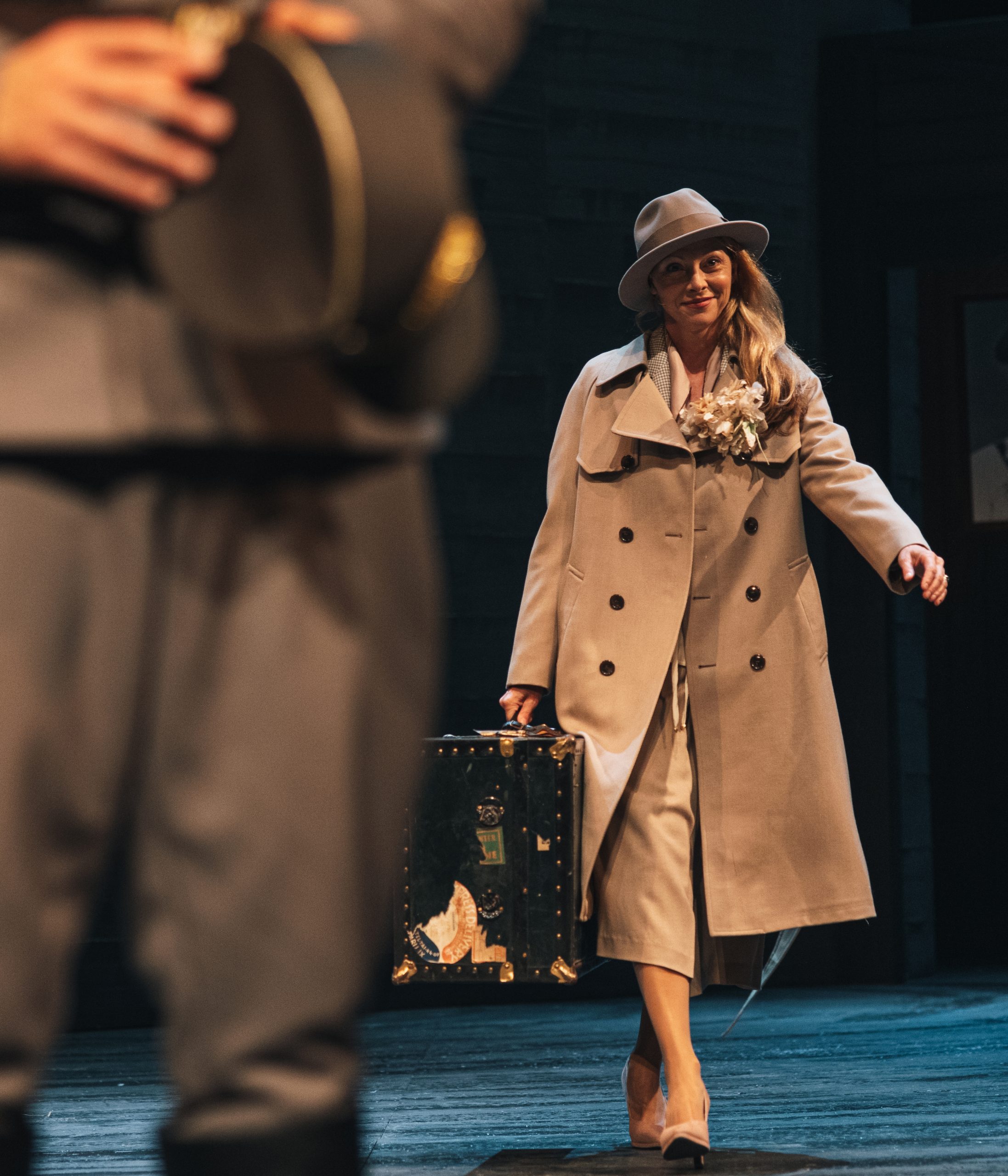
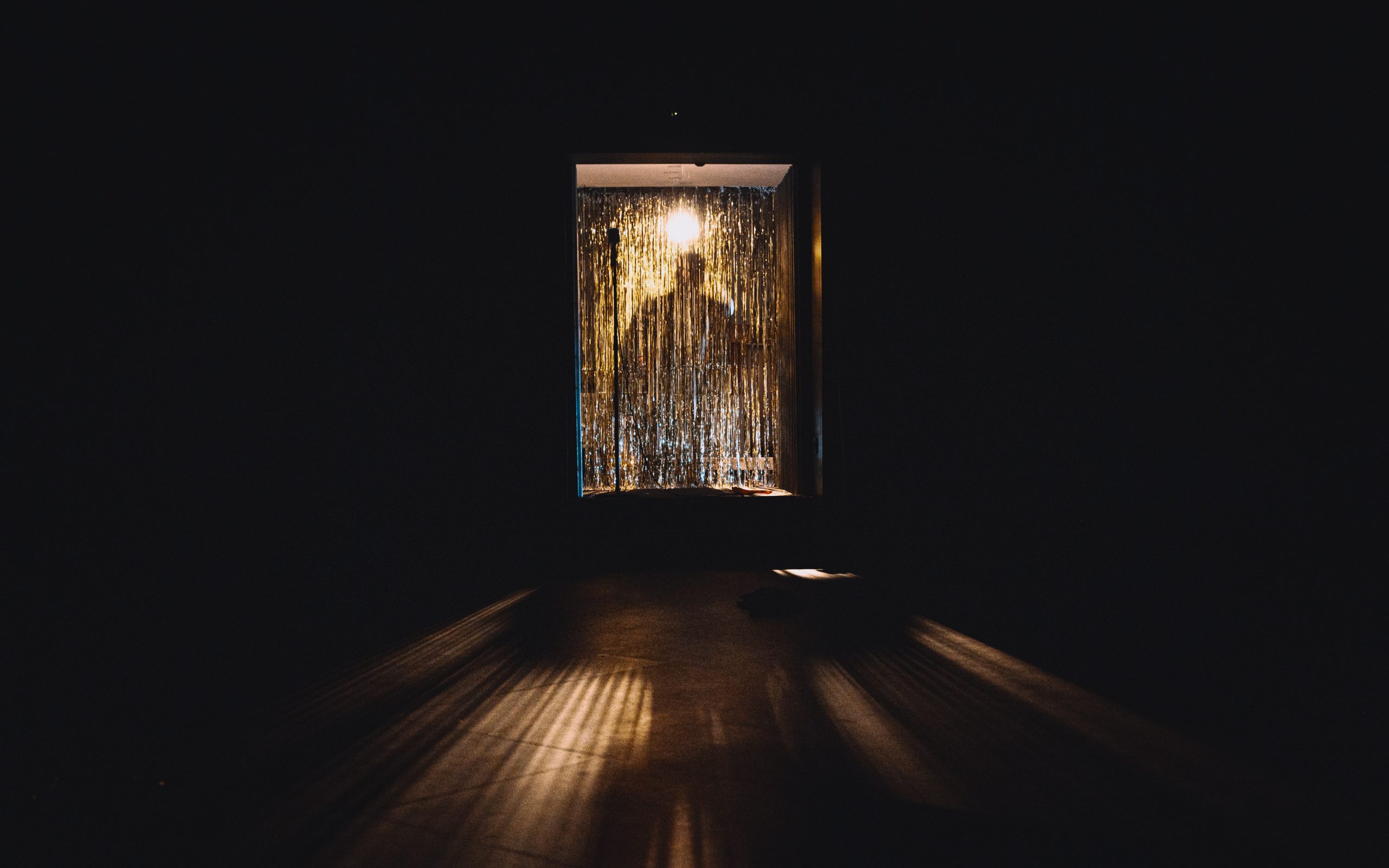
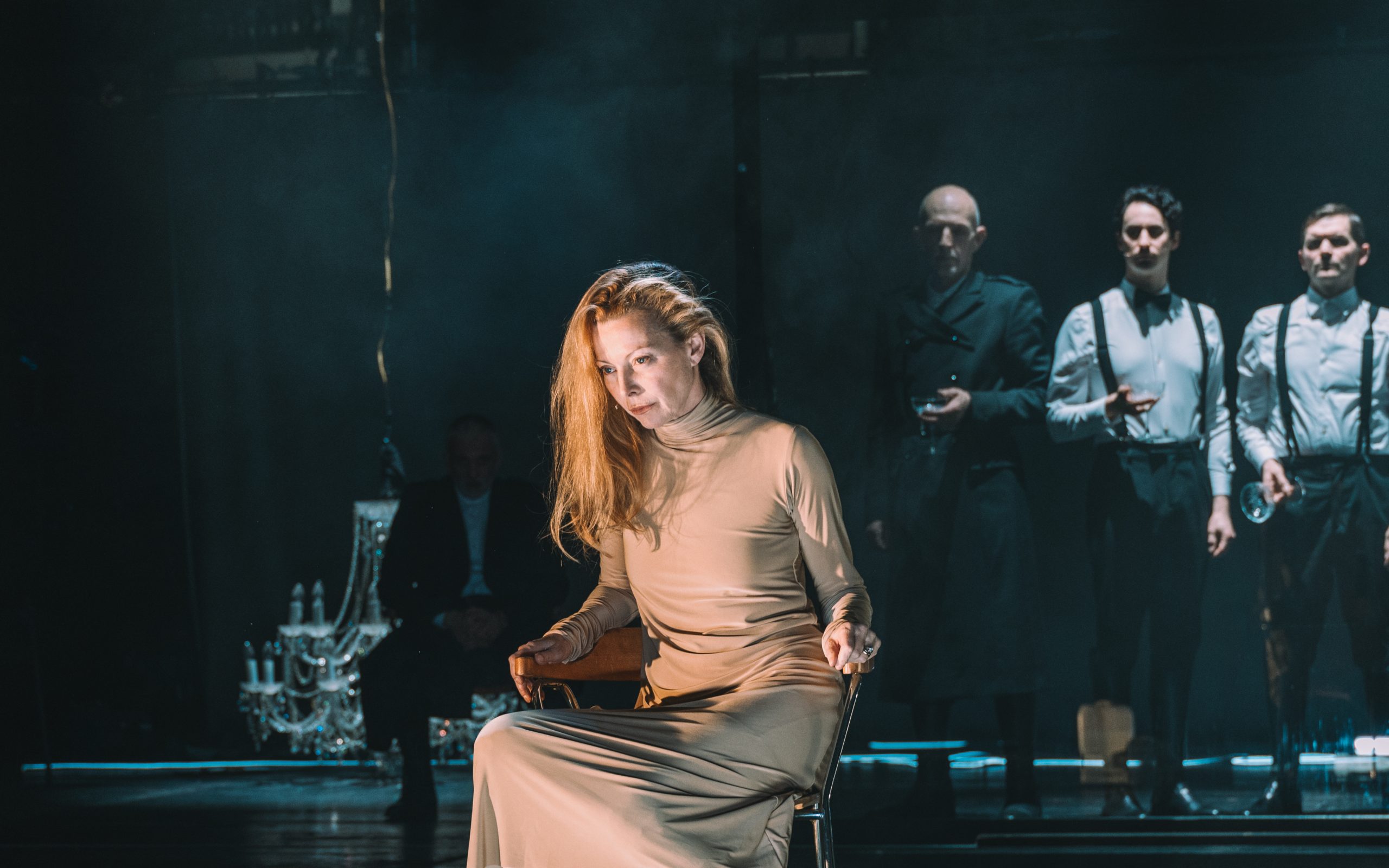
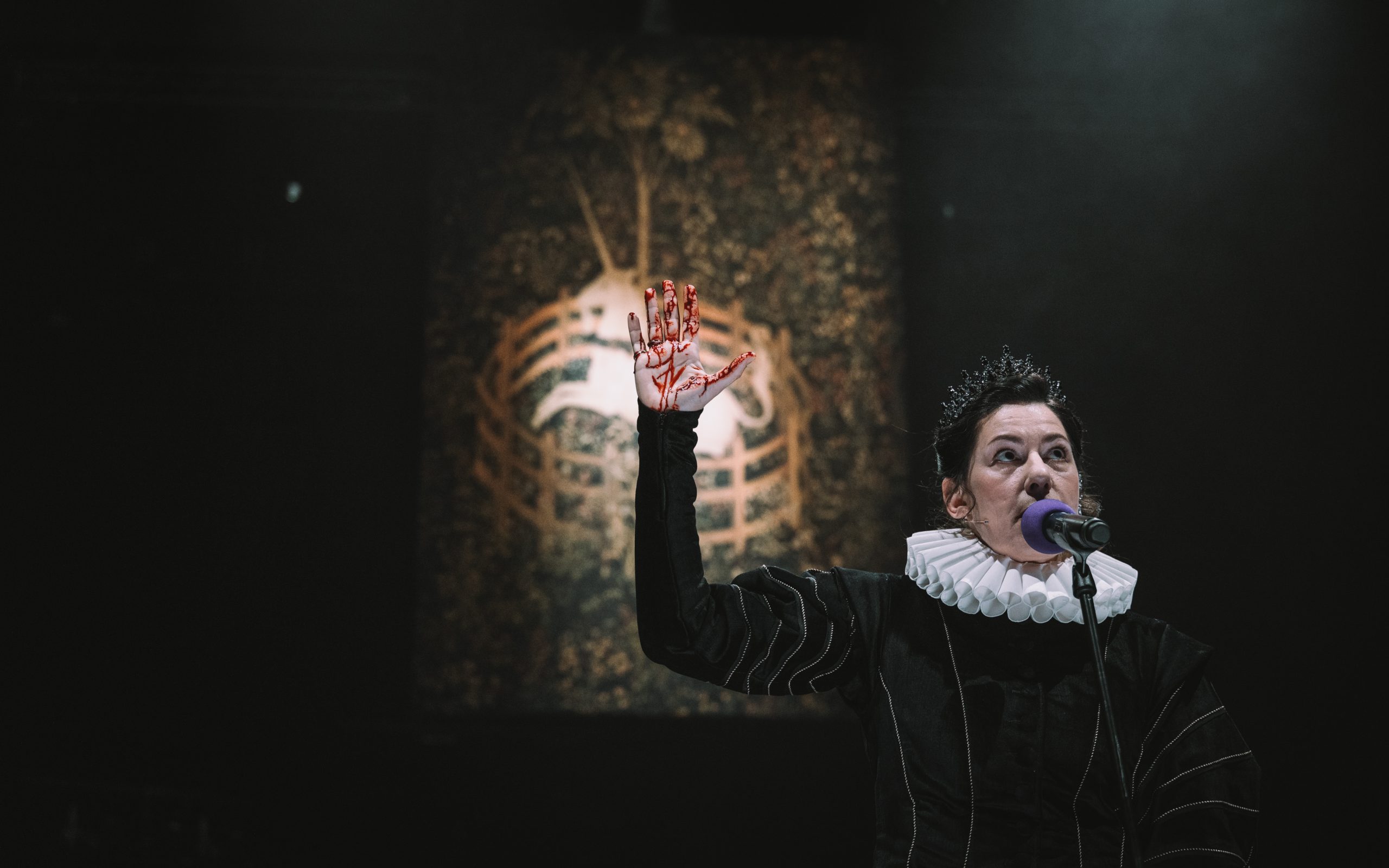
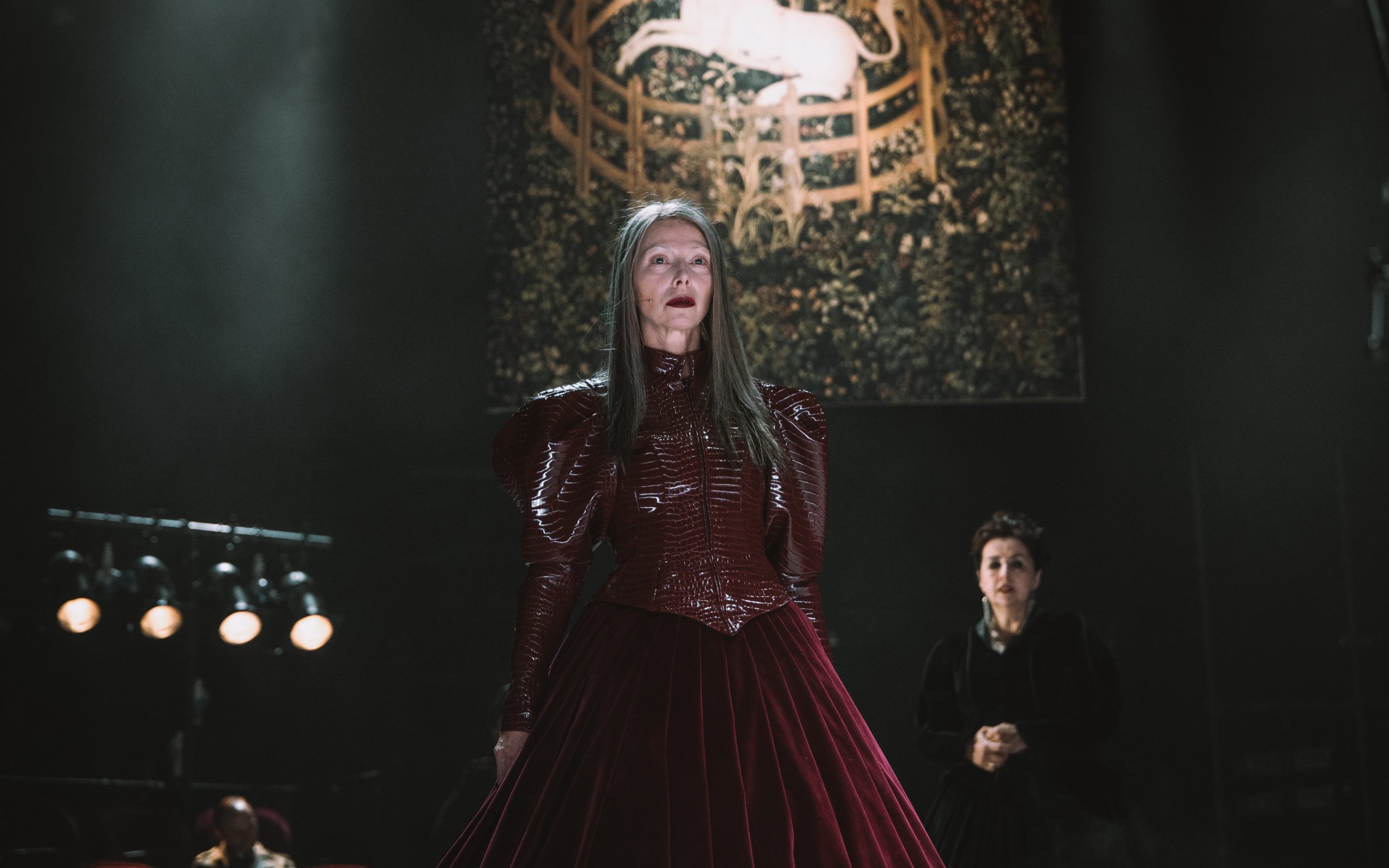
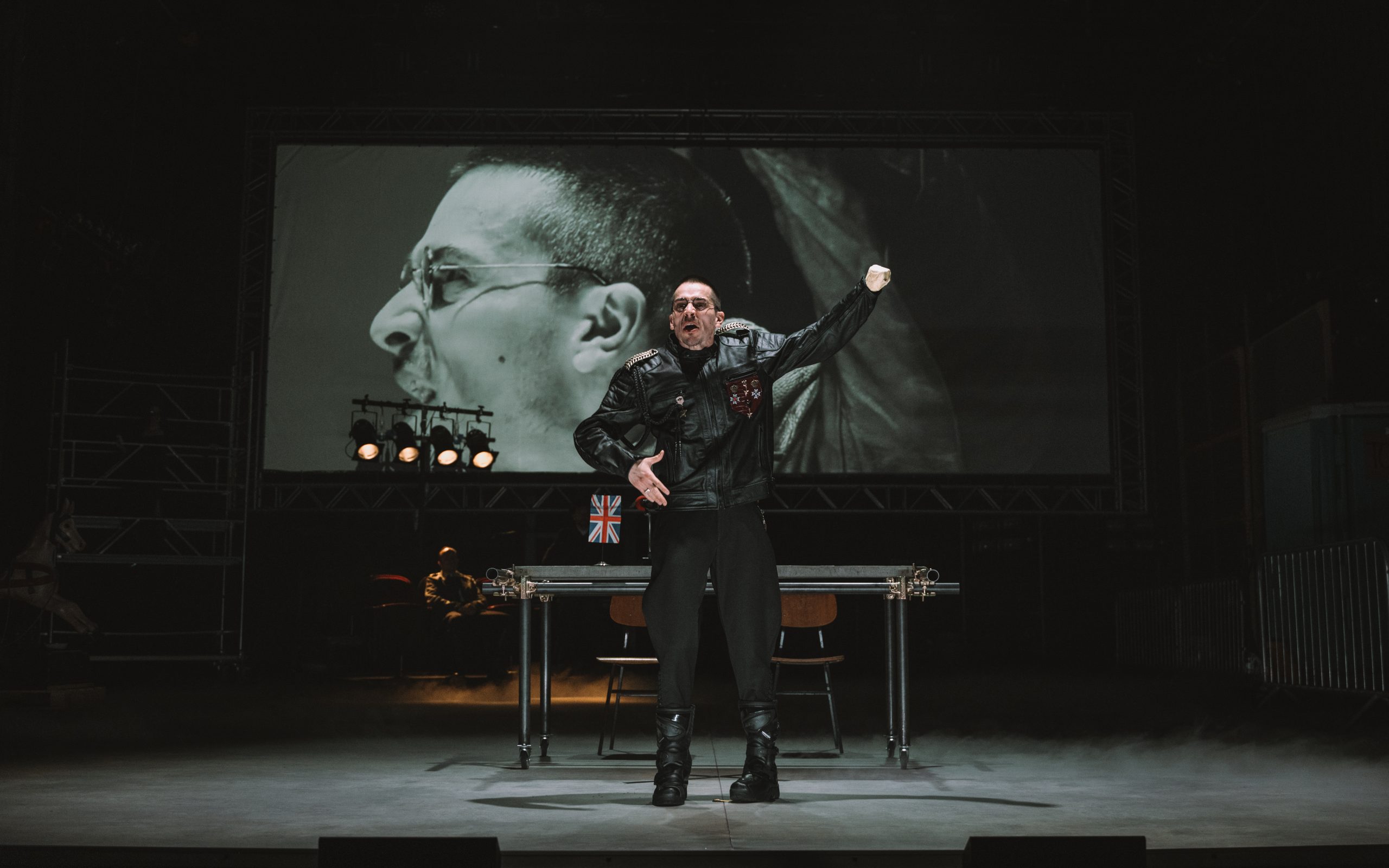
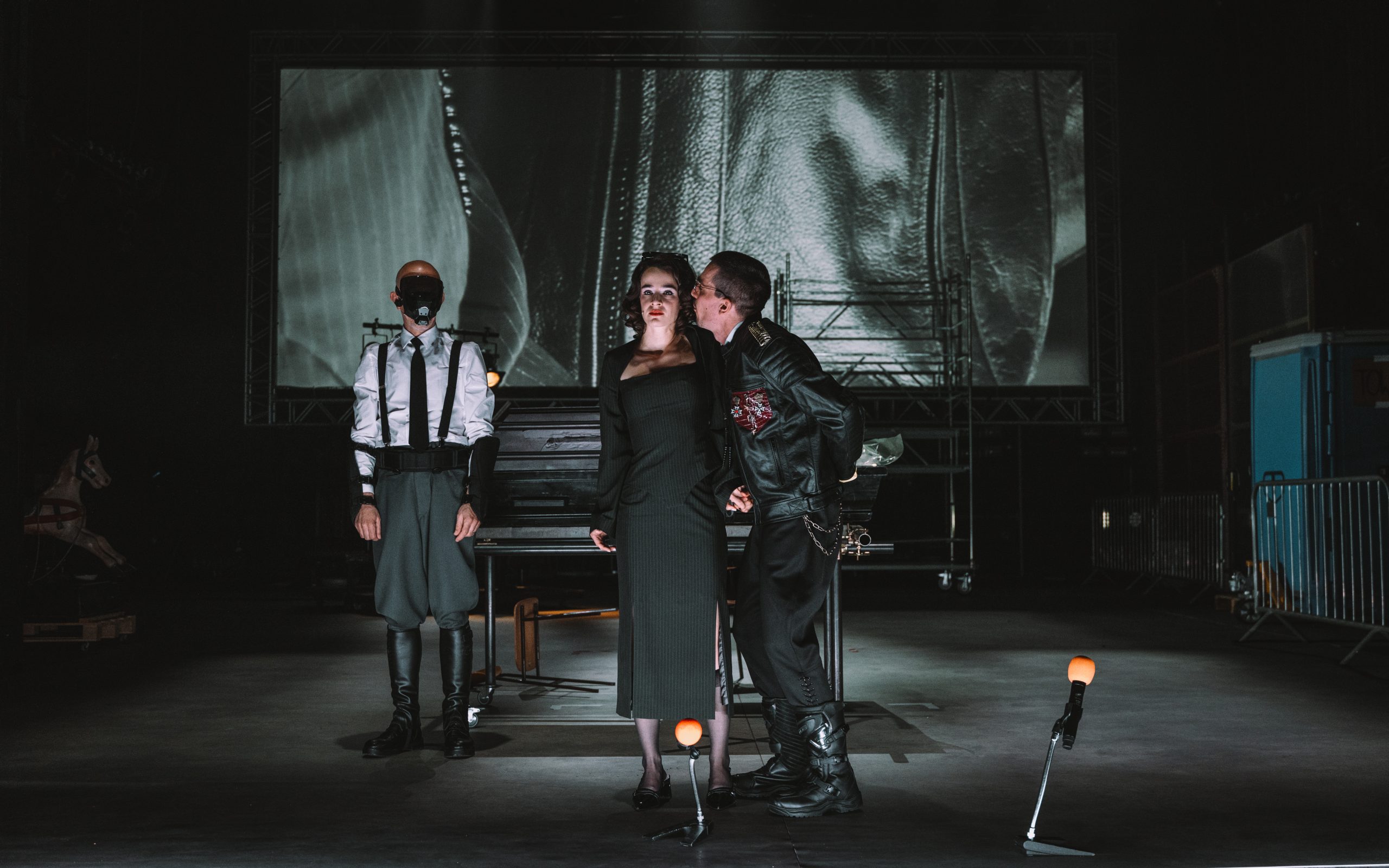
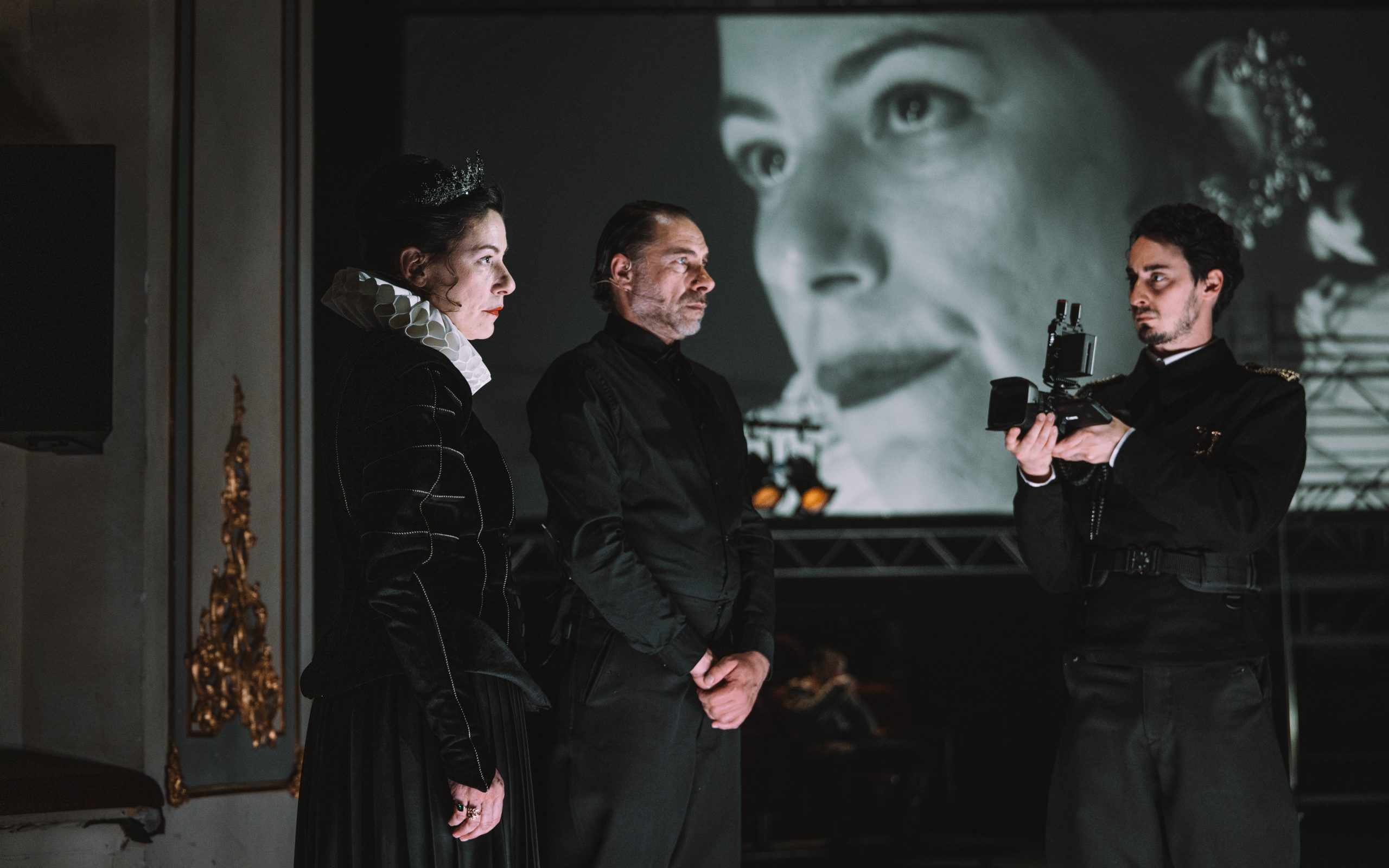
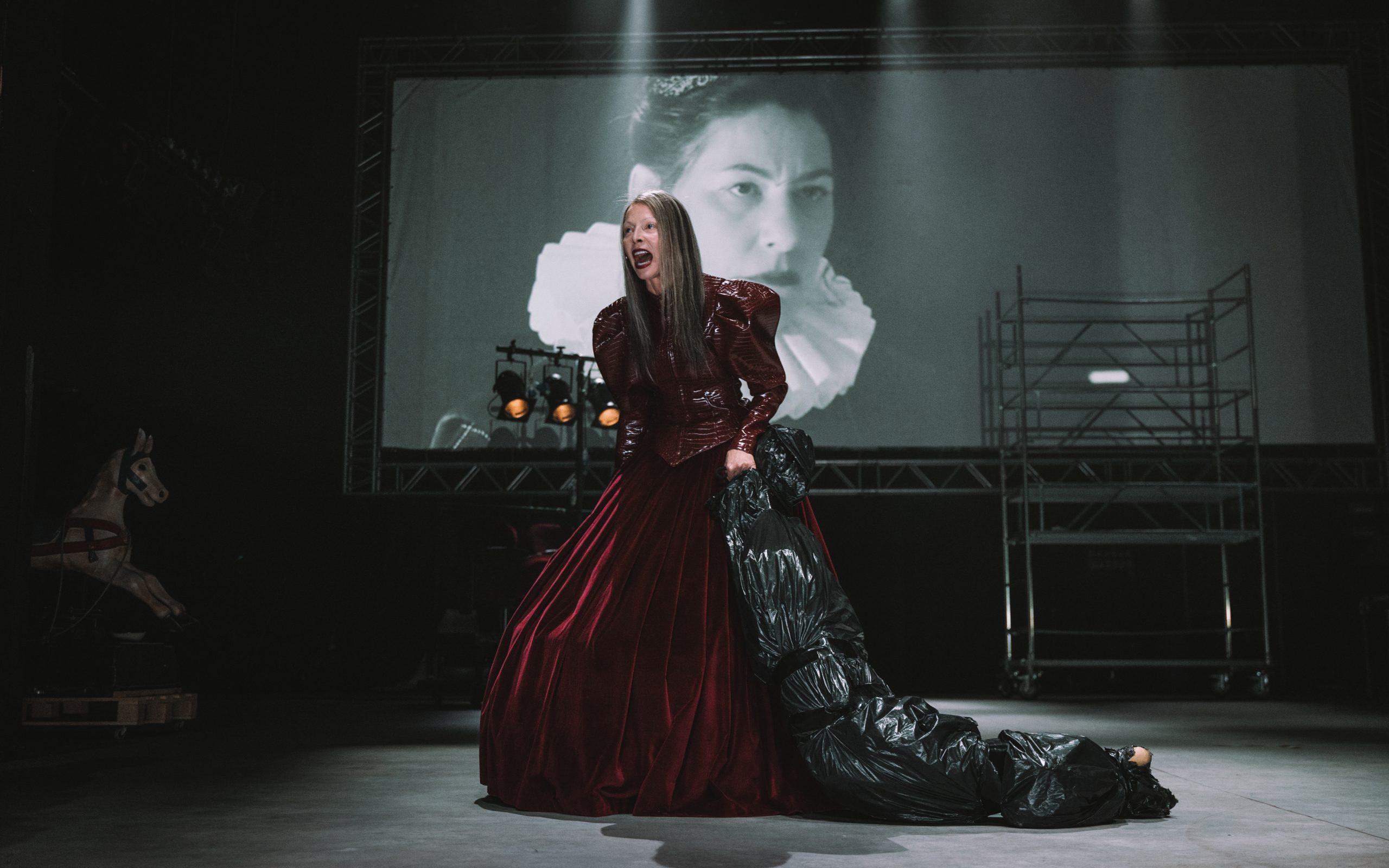
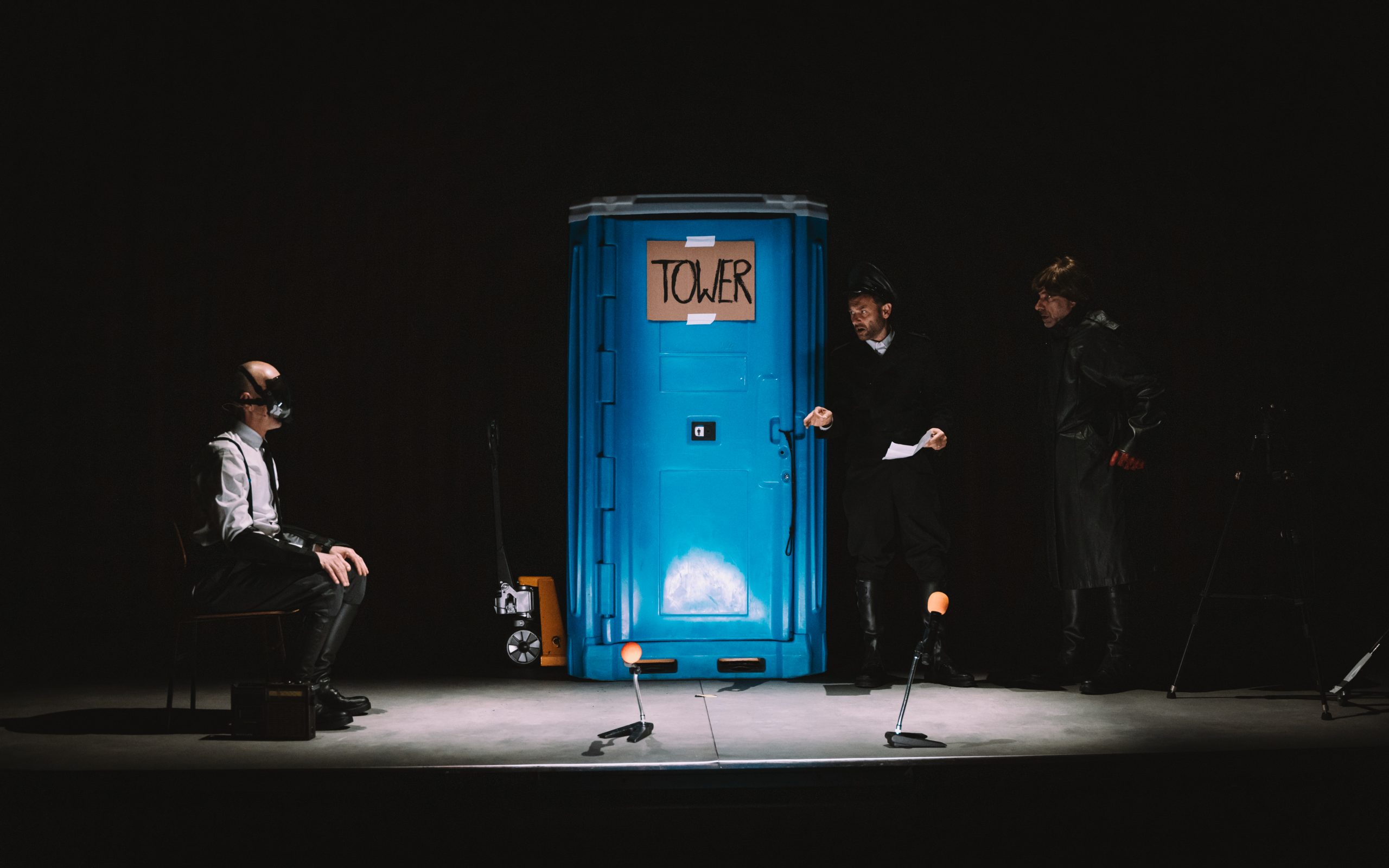
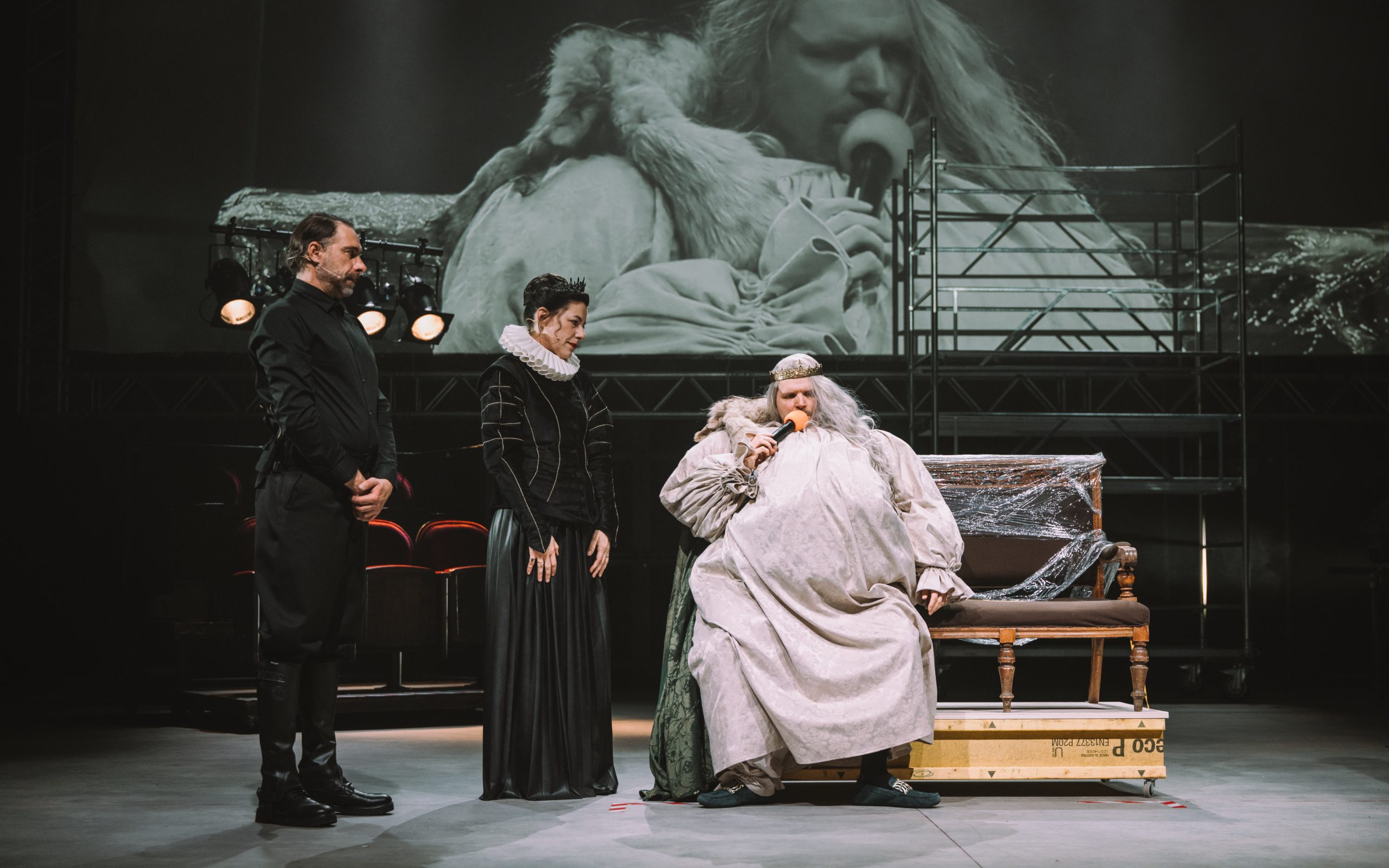
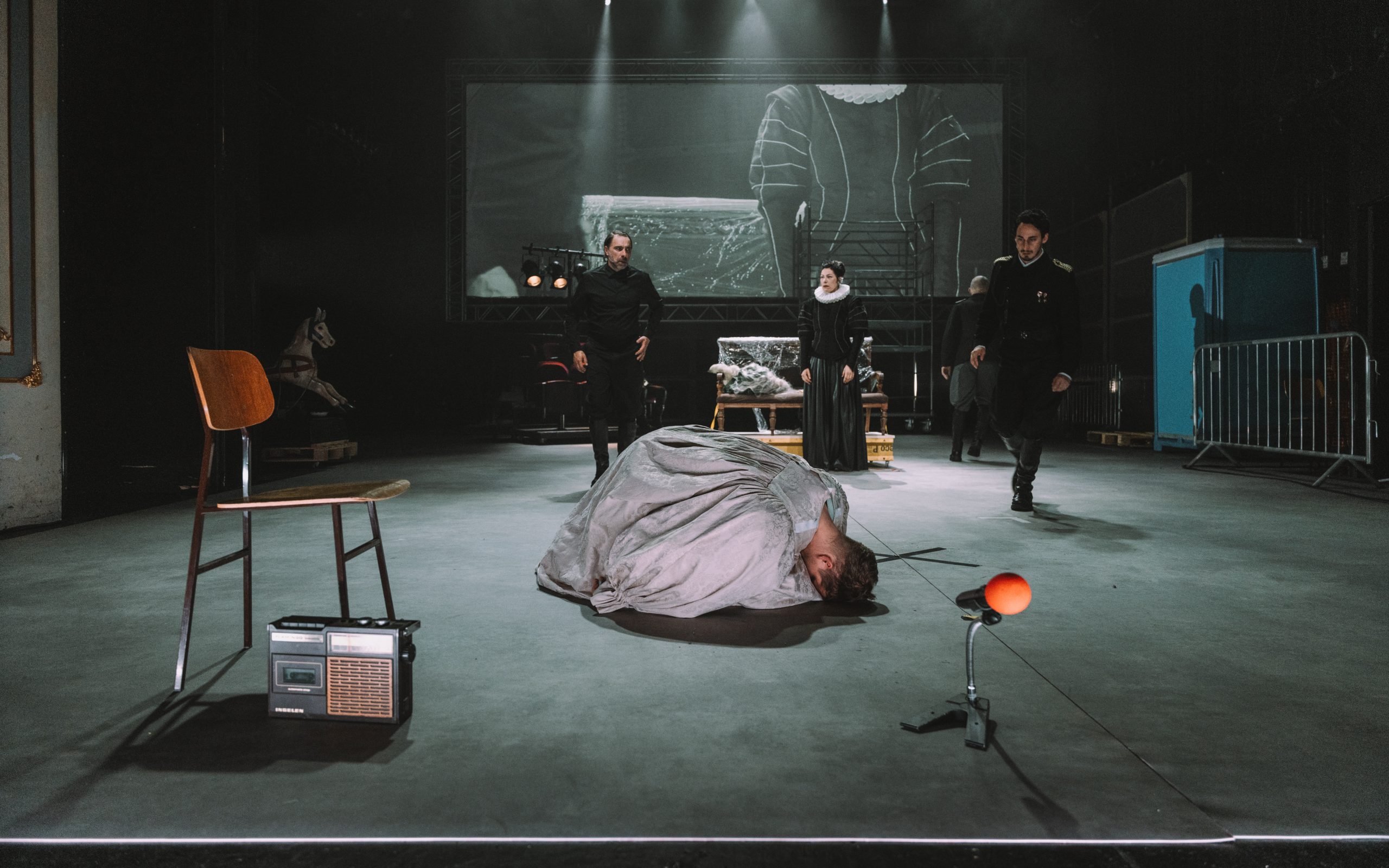
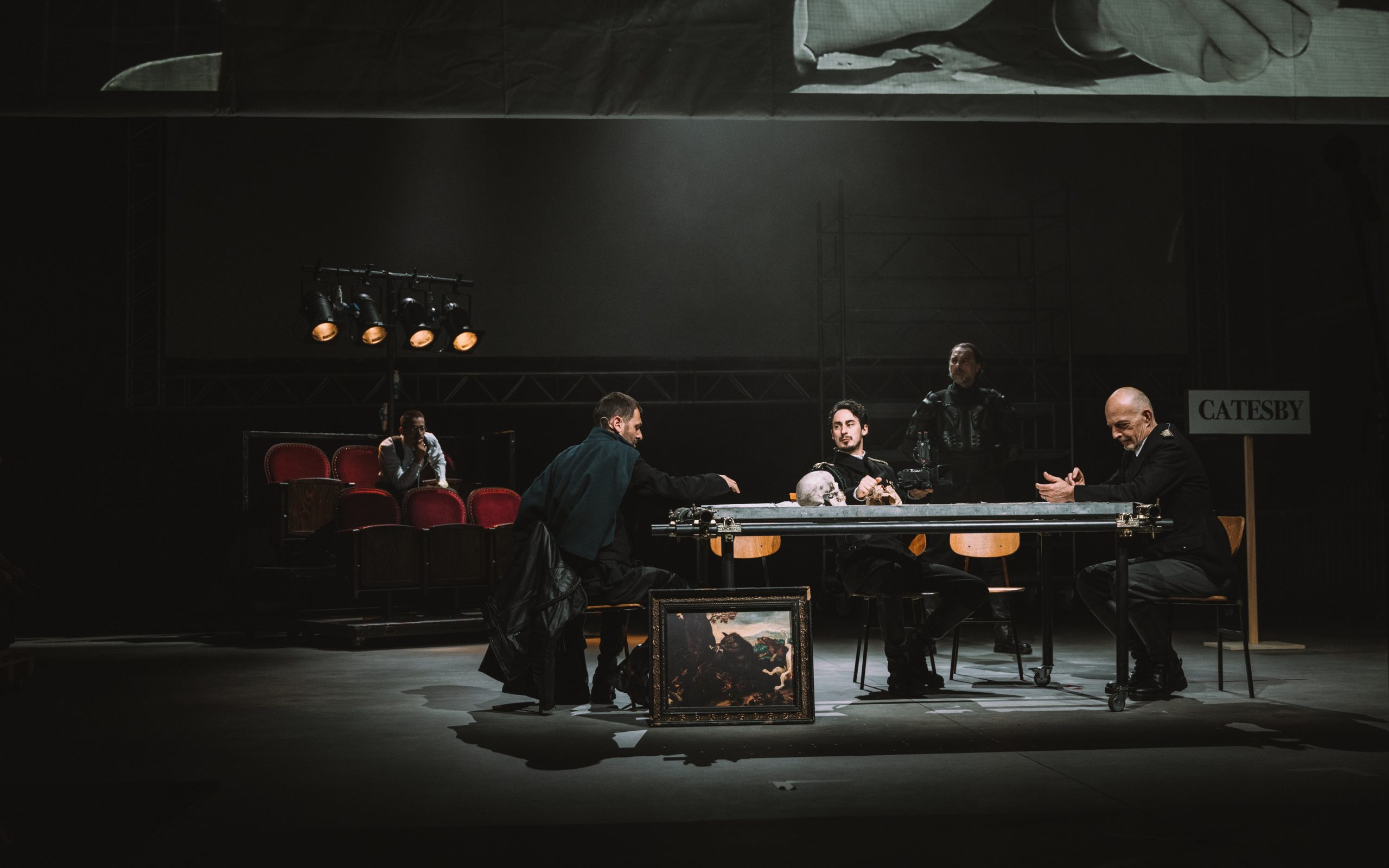
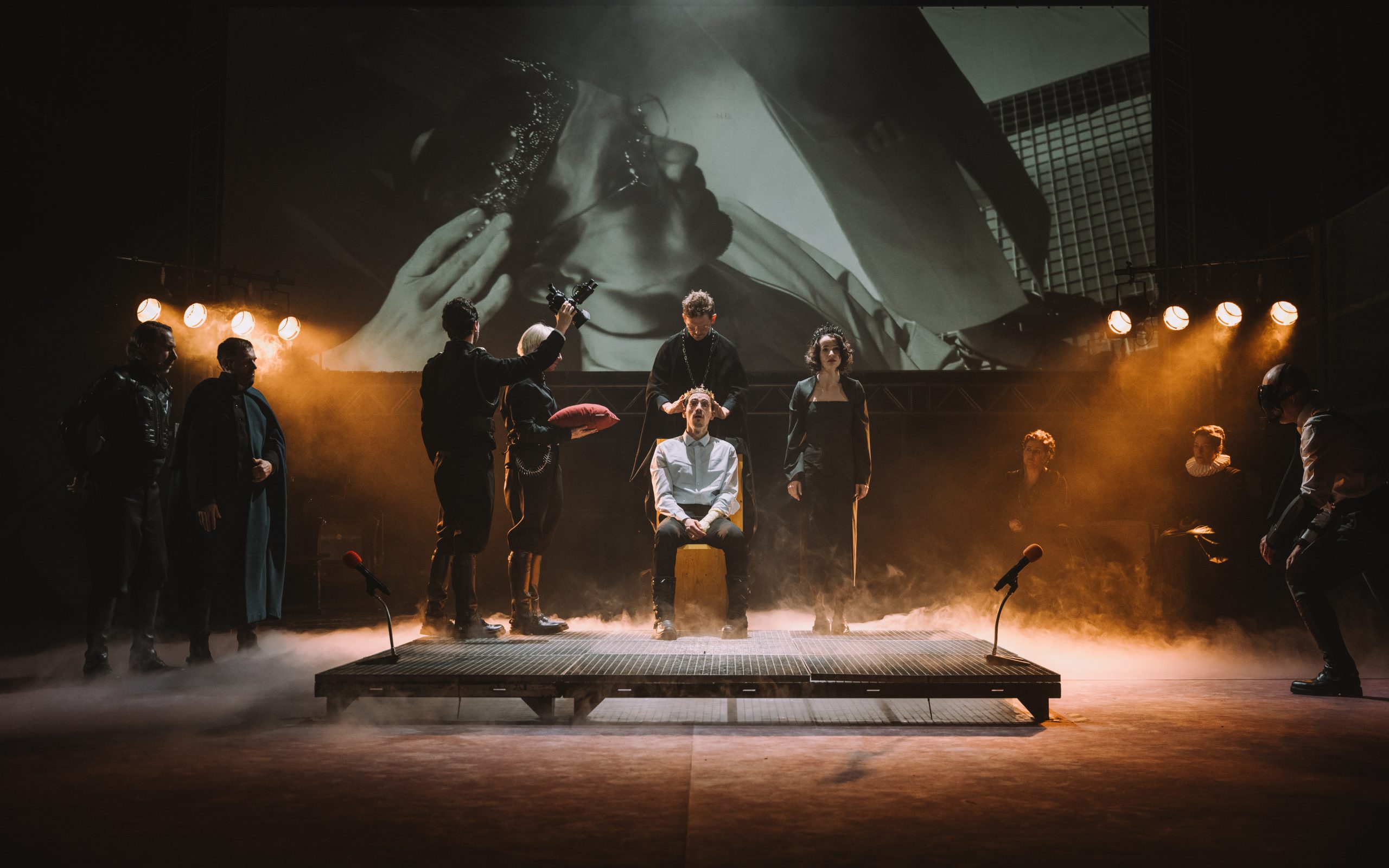
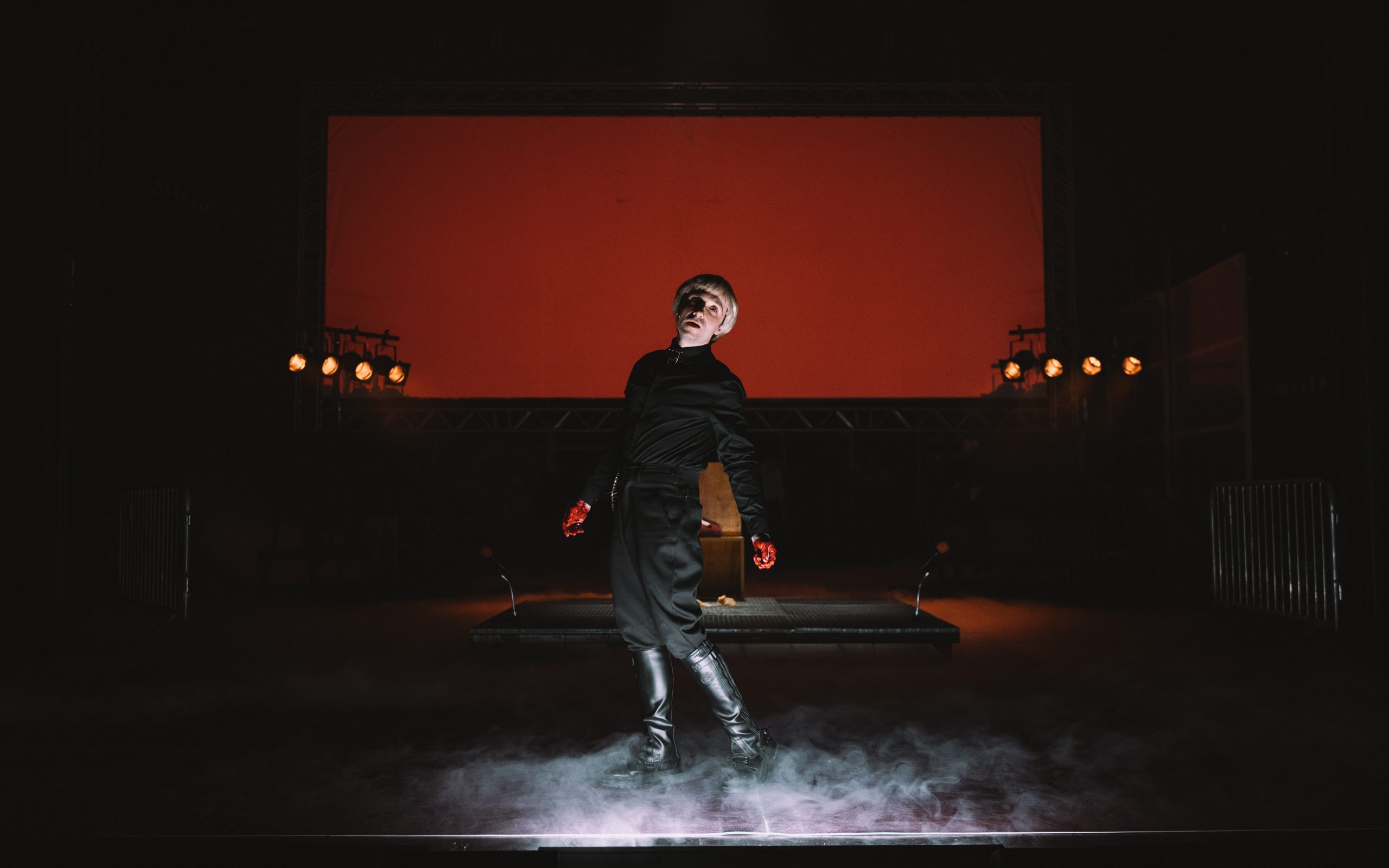
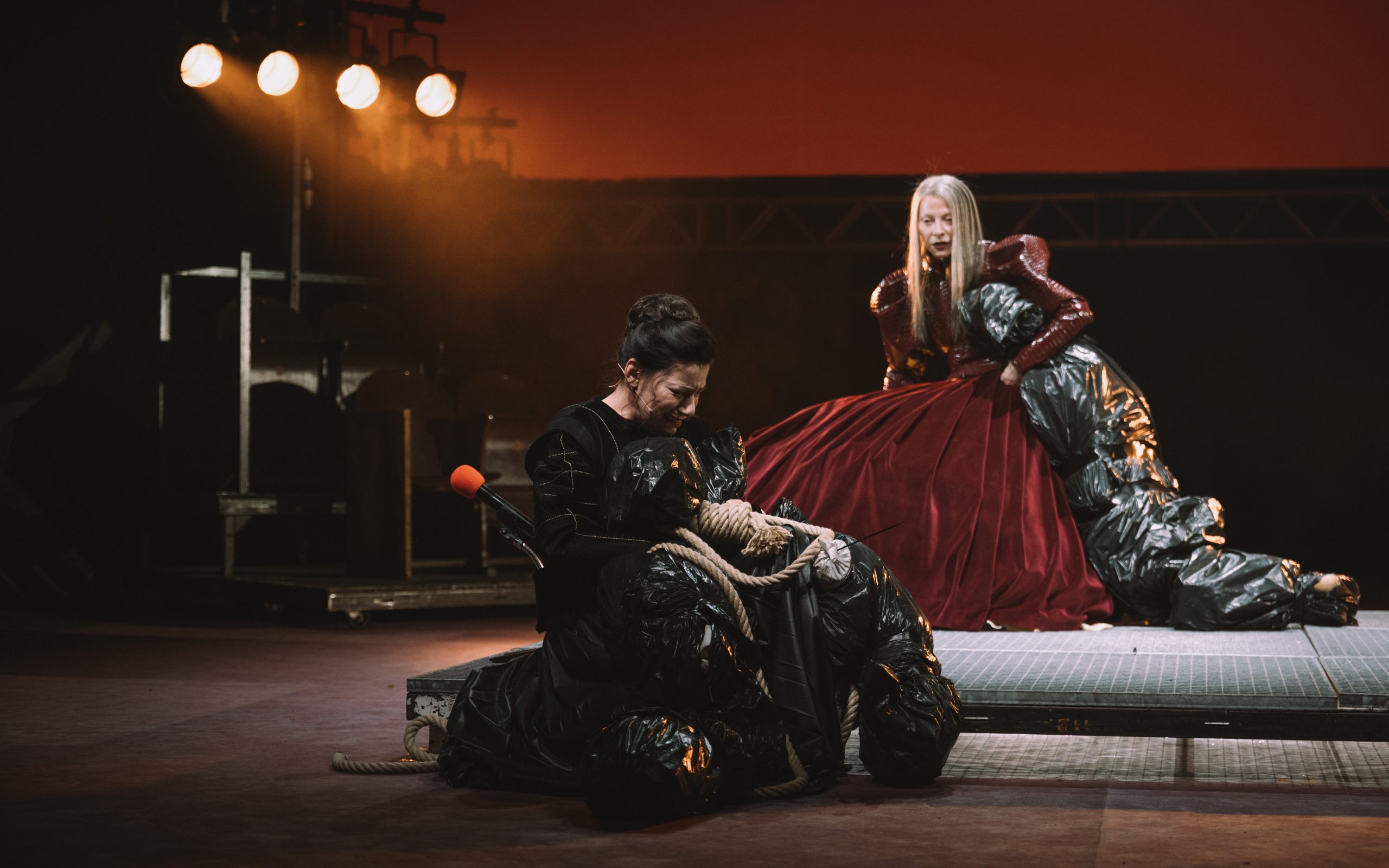
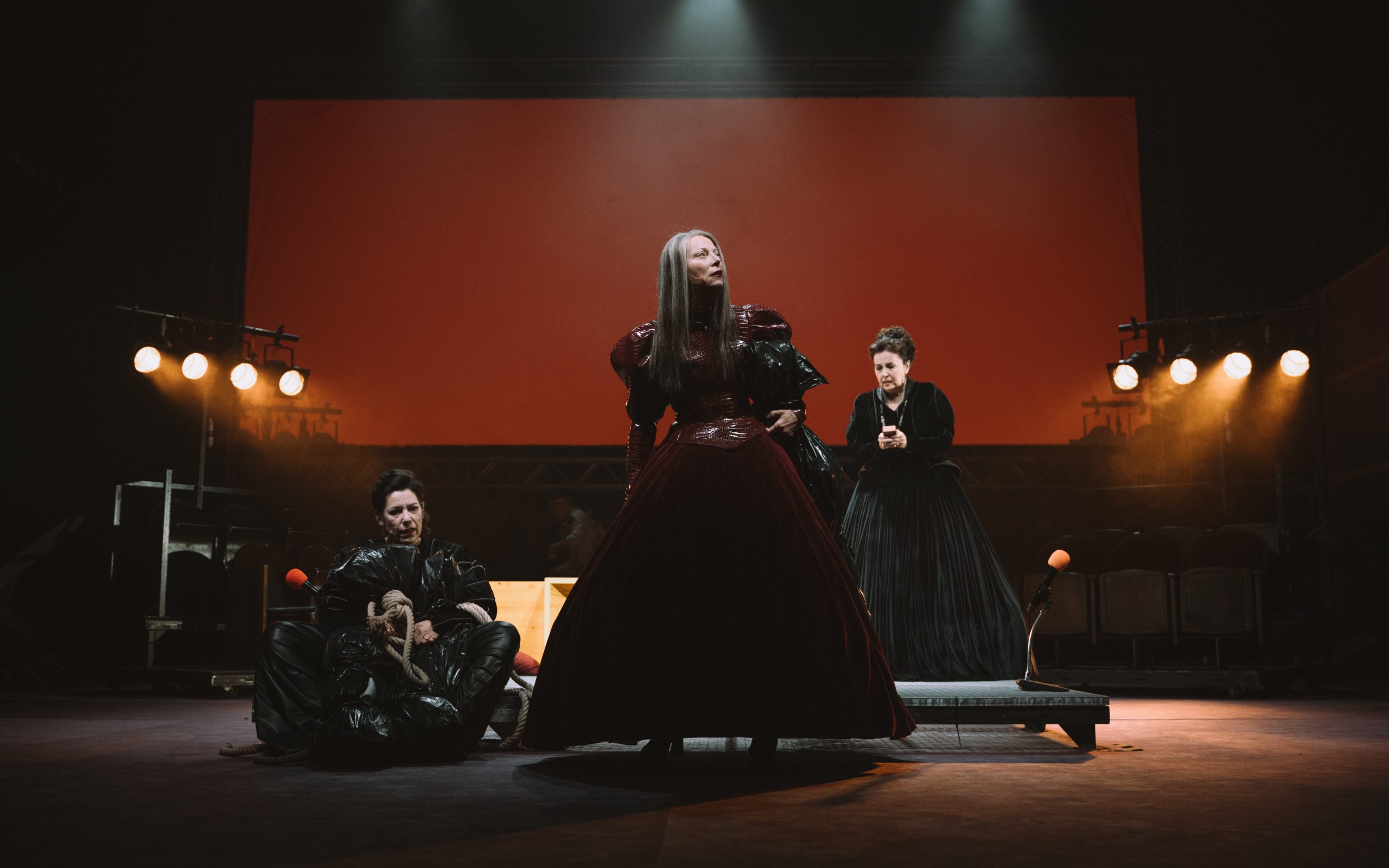
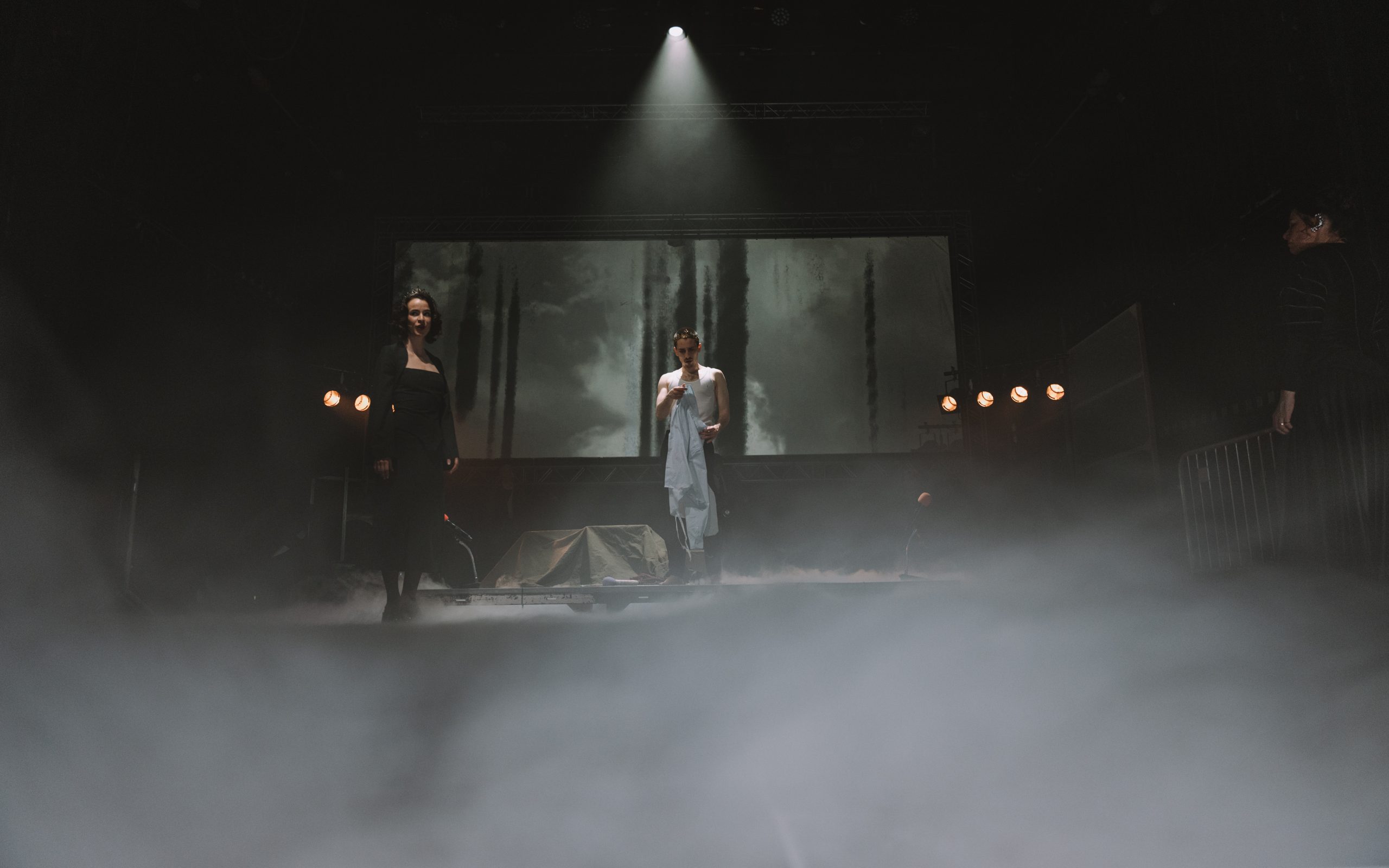
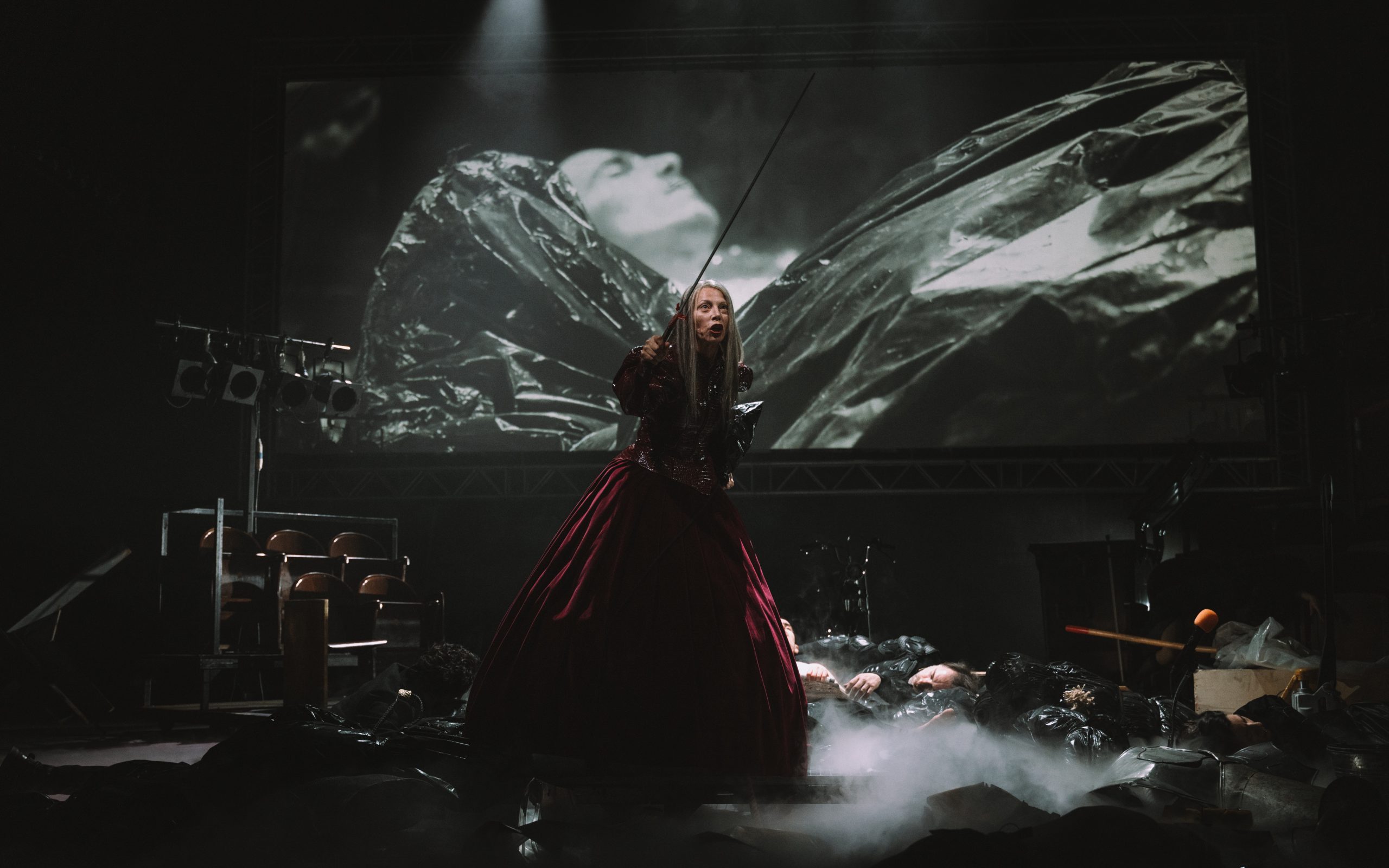
The present staging proceeds from precisely this understanding: power not as a static possession, but as a process, a construction taking shape before our eyes. The stage is not a historical court, but a disintegrating space – at once a sandbox of power and a film set on which reality is constantly edited, arranged, and reinterpreted. Within this framework, Richard is not merely a ruler but the director of his own story: the one who directs the gaze, determines what is seen, and controls the meaning of events. Director Jan Krmelj reads the figure of the protagonist as “a figure of political acceleration, a hurtling toward the end” – not as a weary tyrant on the brink of collapse, but as a young, impulsive actor who forces his way to power with brutal speed. It is precisely this speed, this impatience with time and incessant acceleration of events, that produce a world in which disintegration seems to unfold almost imperceptibly, as though it were merely the by-product of Richard’s private game.
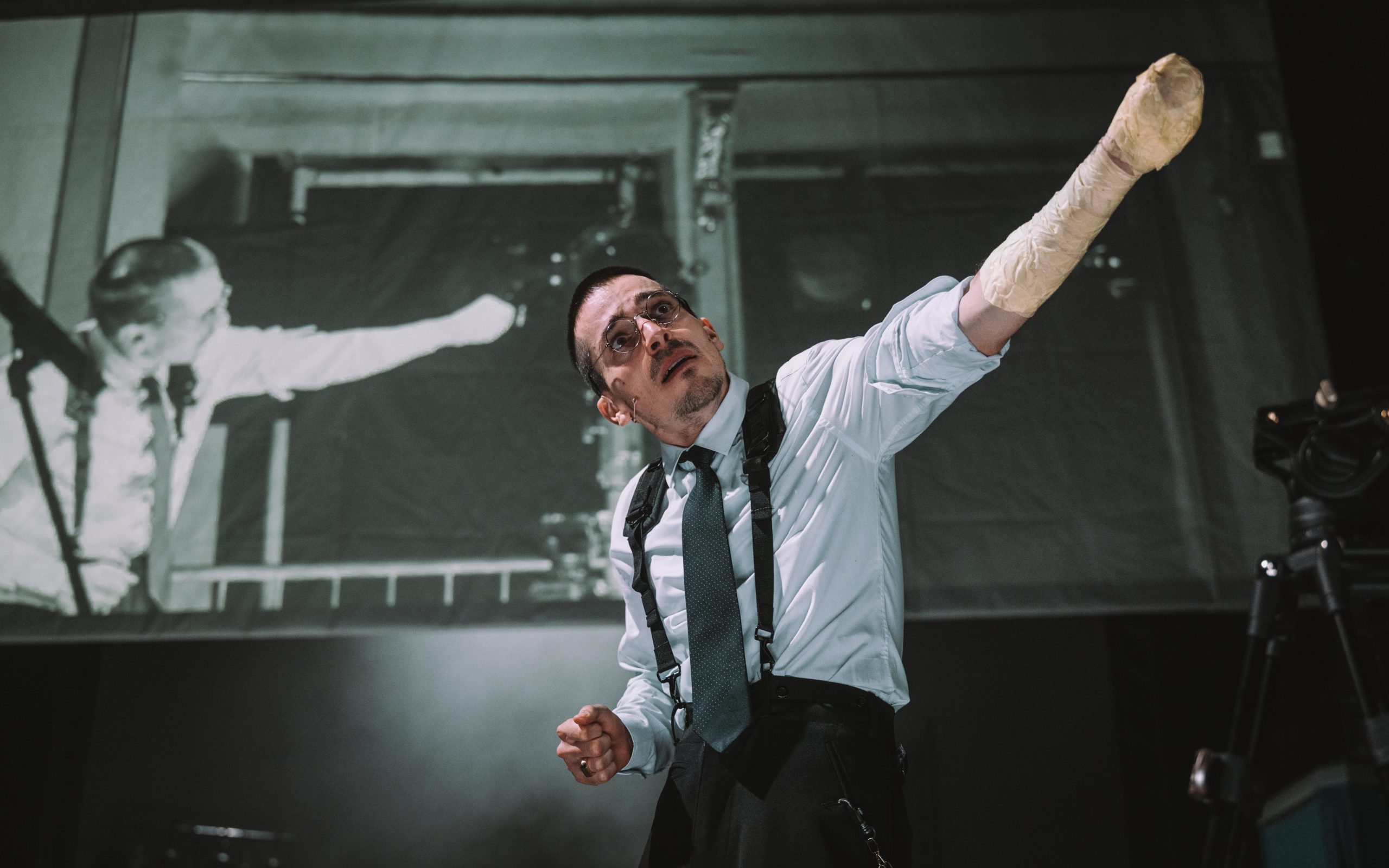
A central element of the production lies in its relationship to the audience. As in Shakespeare’s original, Richard directly addresses us as spectators, reveals his plans to us, and draws us into the very mechanism of power. Yet it is precisely within this disclosure that a paradox resides: violence is no longer concealed, but rendered transparent, articulated, almost shared with us – and for that very reason becomes more easily acceptable. The production raises the question of how contemporary politics operates through a similar logic: through performance, through the public construction of truth, through control over narrative. “Whoever controls the story controls reality,” as the director puts it.
Jernej Potočan’s dramaturgical interpretation insists that Richard cannot be understood as a “failure of the system.” On the contrary, he is its most consistent expression. The world in which he operates rewards efficiency, decisiveness, and a readiness to resort to violence, while conscience appears merely as an impediment – or, in Richard’s own words, “conscience is but a word that cowards use.” Richard succeeds precisely because he recognizes the logic by which the system operates and carries it to its most extreme realization. His power lies not only in his actions, but in his assumption of total control over the interpretation of the world: by explaining to the audience what is happening, he also determines how it is to be understood. Politics thus becomes a question of perception – the organization of the visible and of meaning.
The historical image of Richard III (1452–1485) remains suspended between myth and reconstruction. His brief reign at the close of the Wars of the Roses was soon after his death interpreted through the prism of Tudor propaganda, which presented him as evil incarnate and thereby legitimized the new order. Literature, and Shakespeare’s drama in particular, consolidated this image, while modern historical scholarship has revealed a more complex figure: a capable, ambitious, and ruthless politician operating within the violent political system of his time. His fall at Bosworth in 1485 marks both the end of the Wars of the Roses and the beginning of the Tudor dynasty, while simultaneously exposing the fragility of power founded upon violence and control.
Within this tension between history and myth, between document and fiction, the production opens a space for reflection on the present. Richard is not merely a historical figure, but an archetype – a figure of power constituted through manipulation, spectacle, and control over truth. His story is not confined to the past, but recurs in ever-new forms of political reality, where power is constantly staging itself anew – and where we, as spectators, are always also its accomplices.

Fran Žižek Hall
1 Intermission
Photo gallery












Cast











Director
Creators
We invite you to see