MARY STUART
MARY STUART
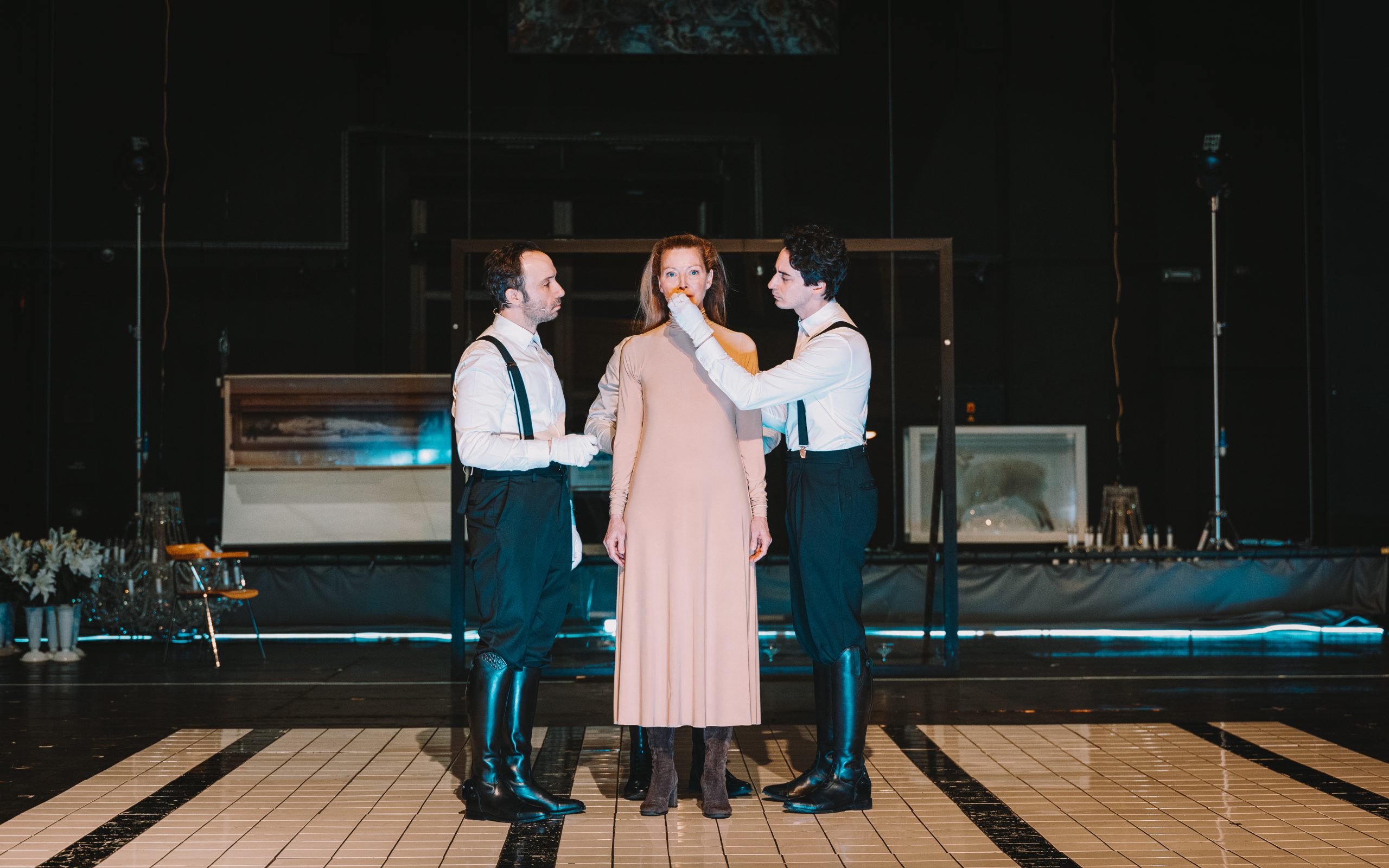
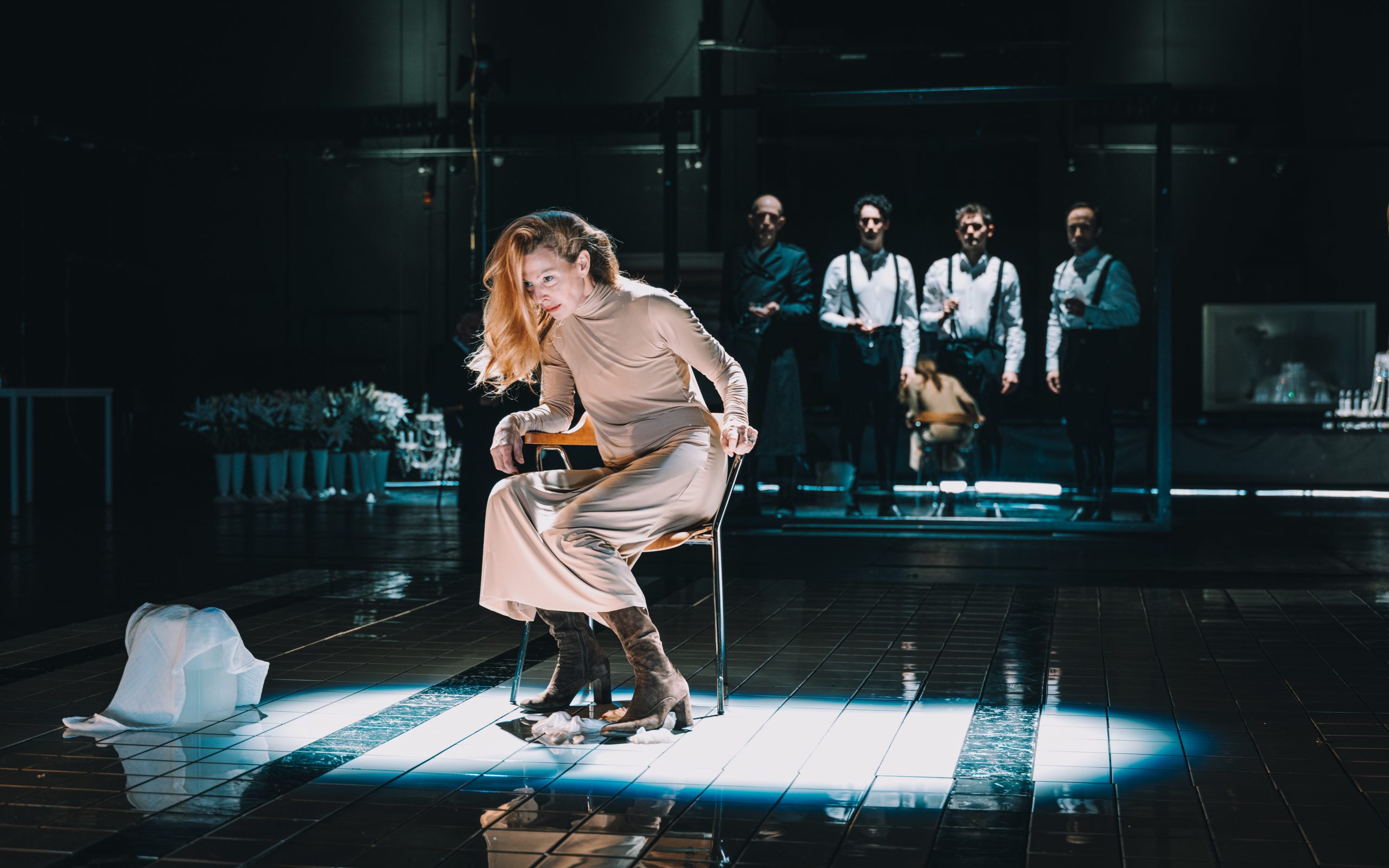
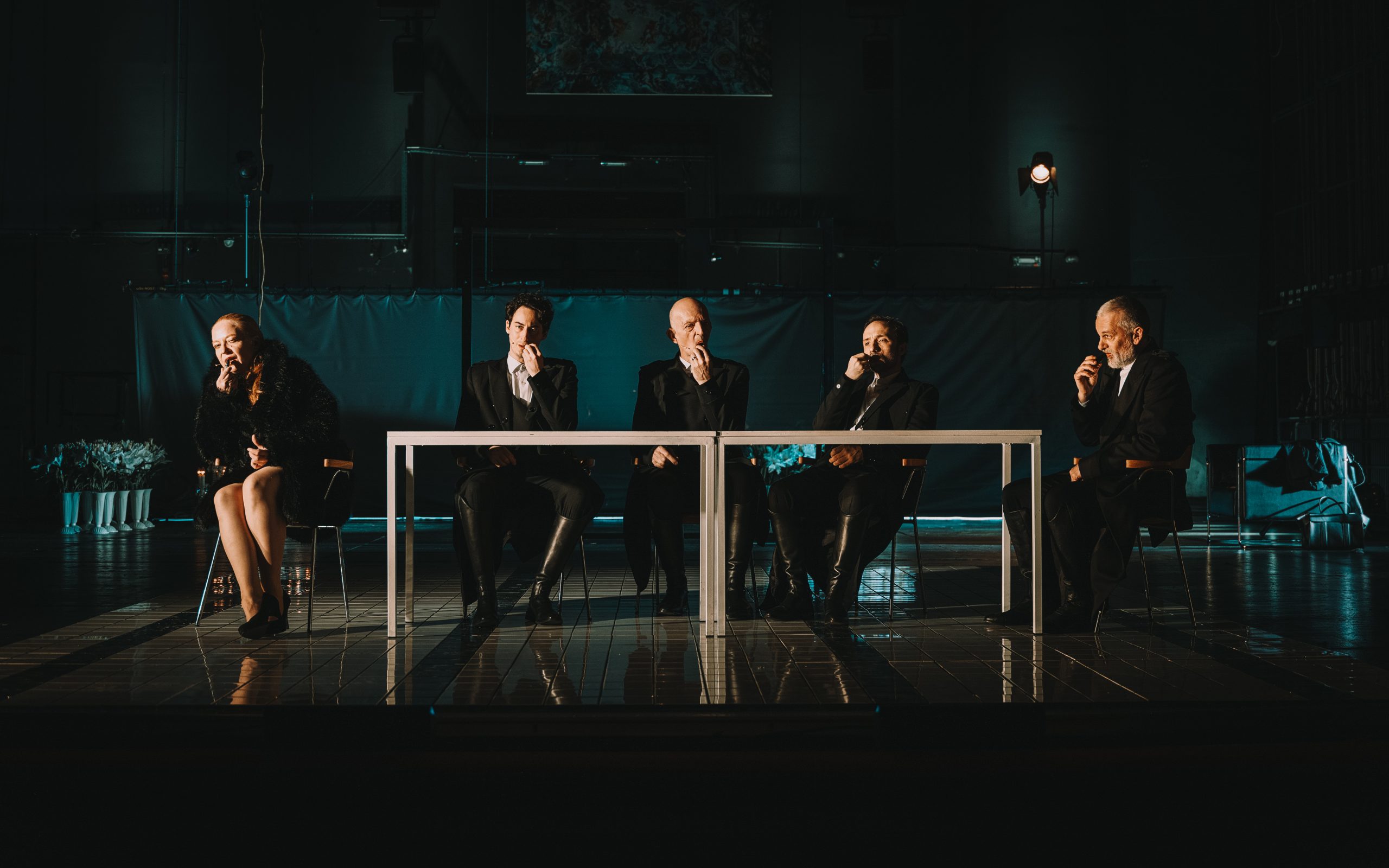
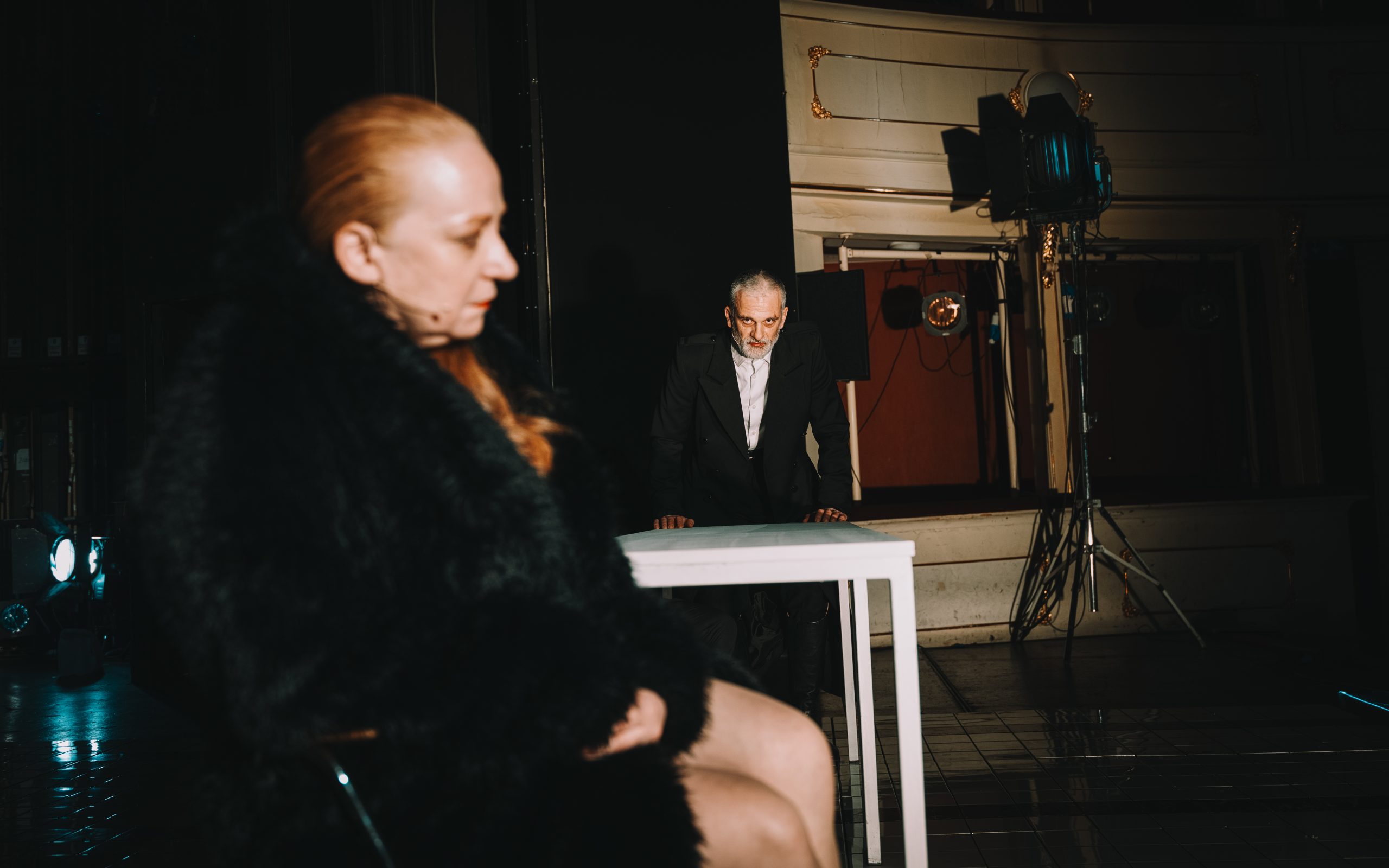
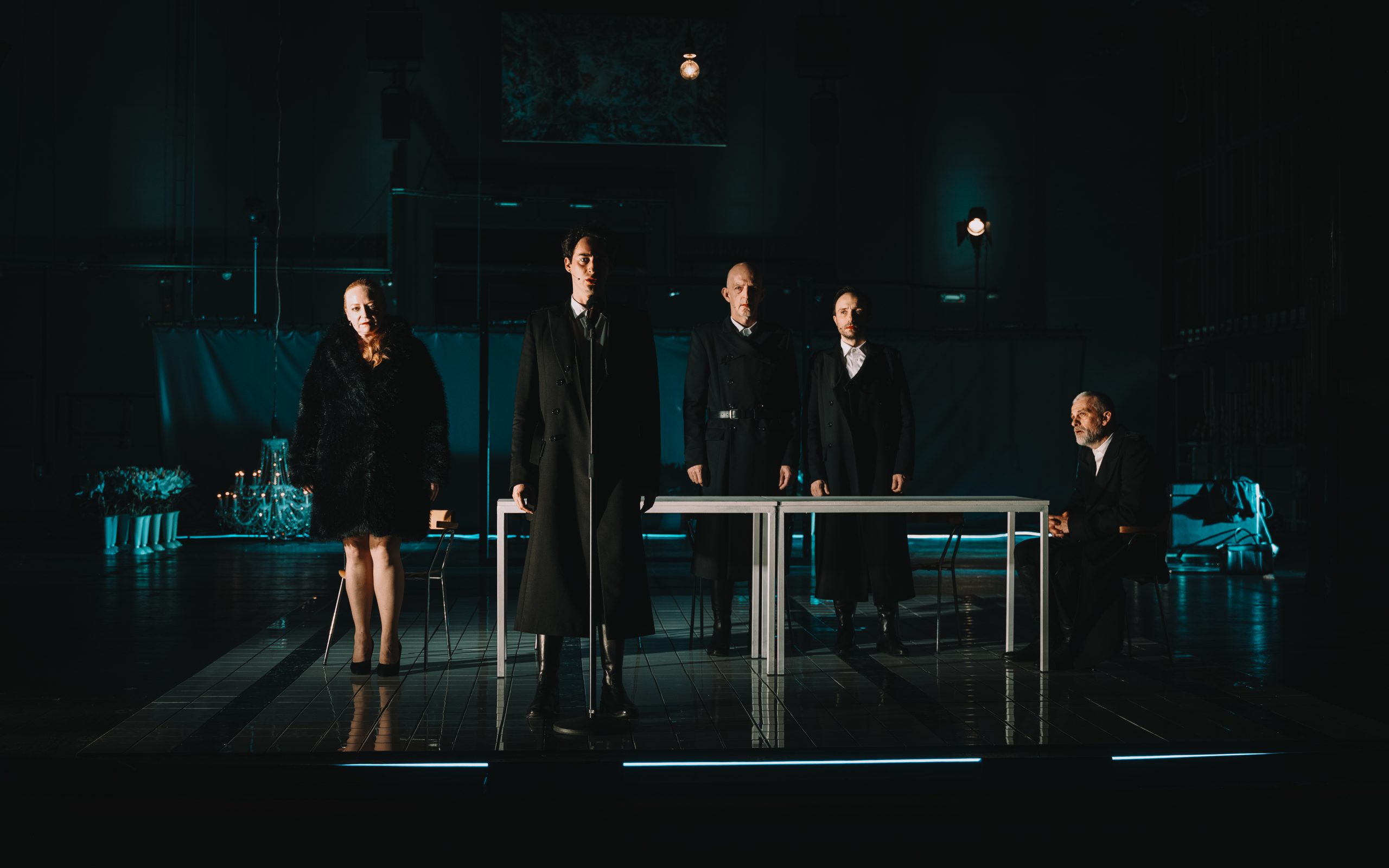
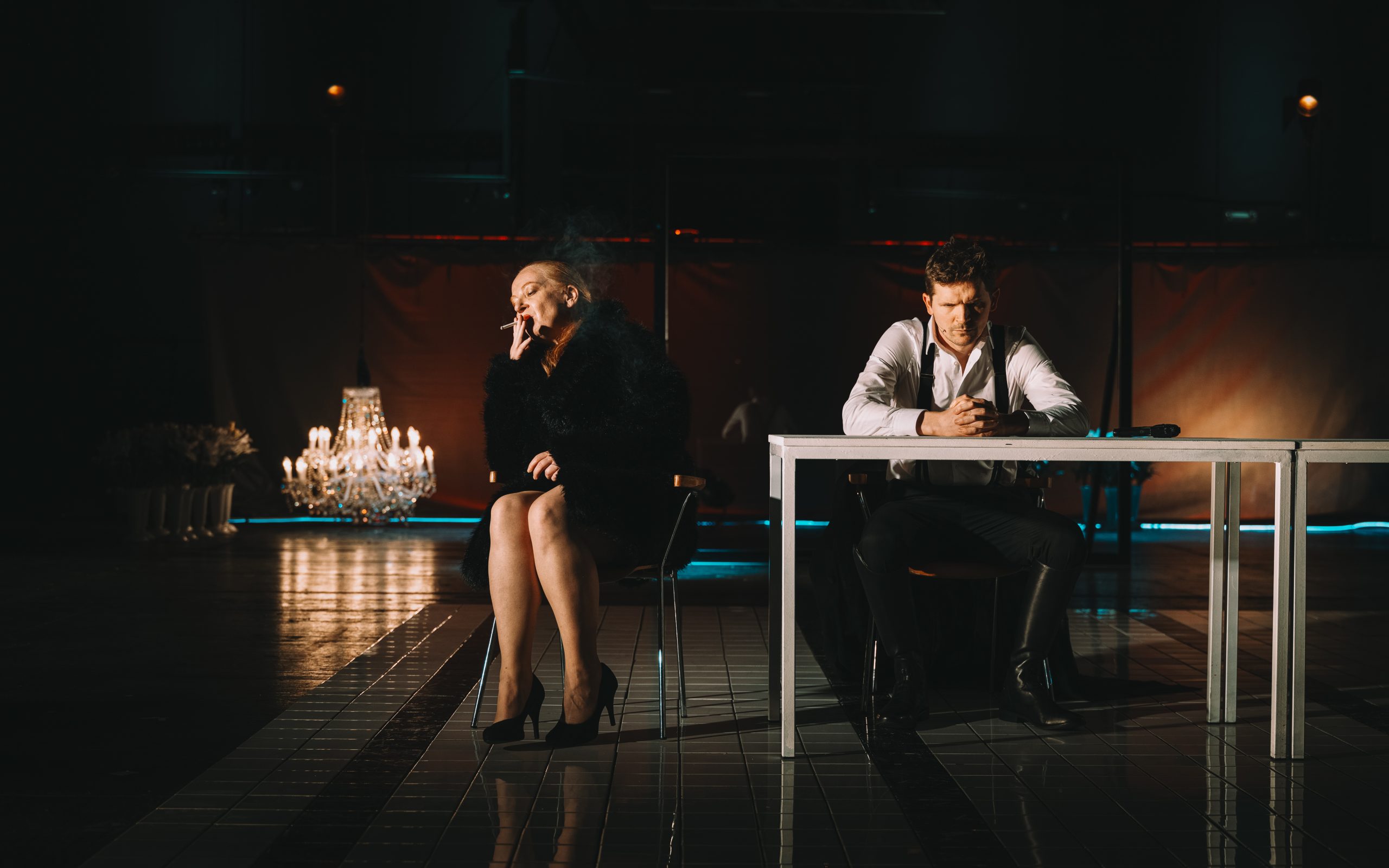
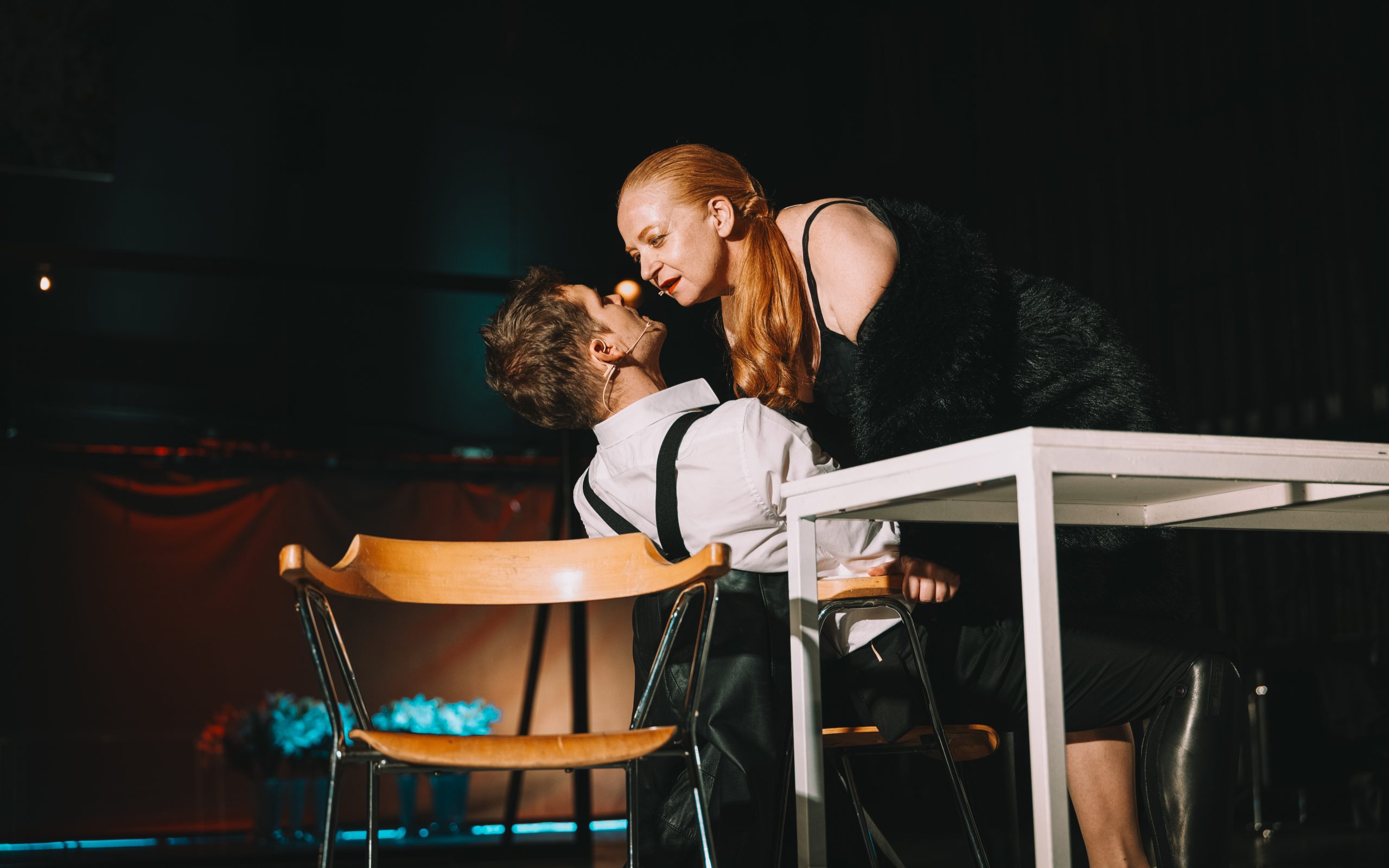
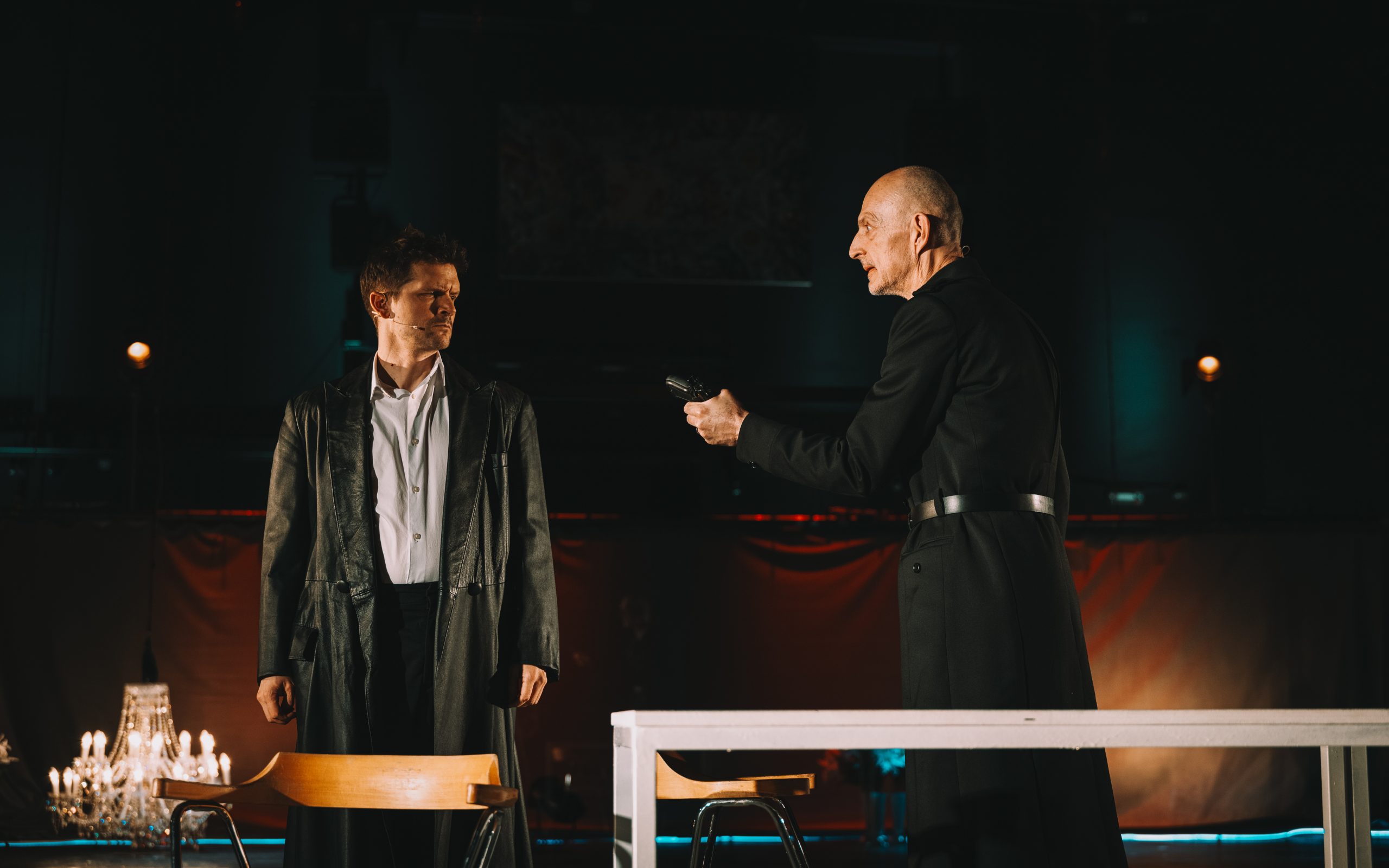
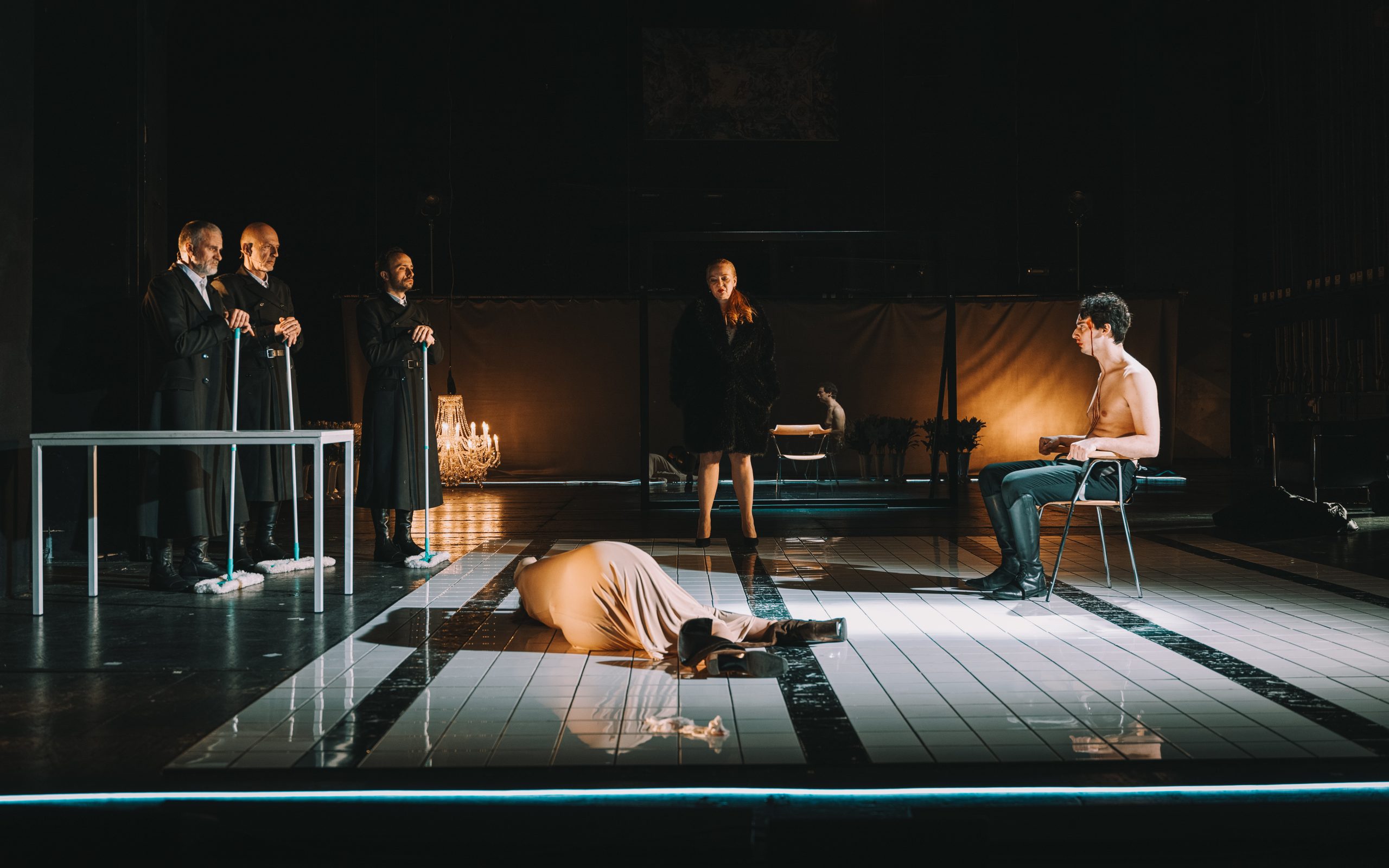
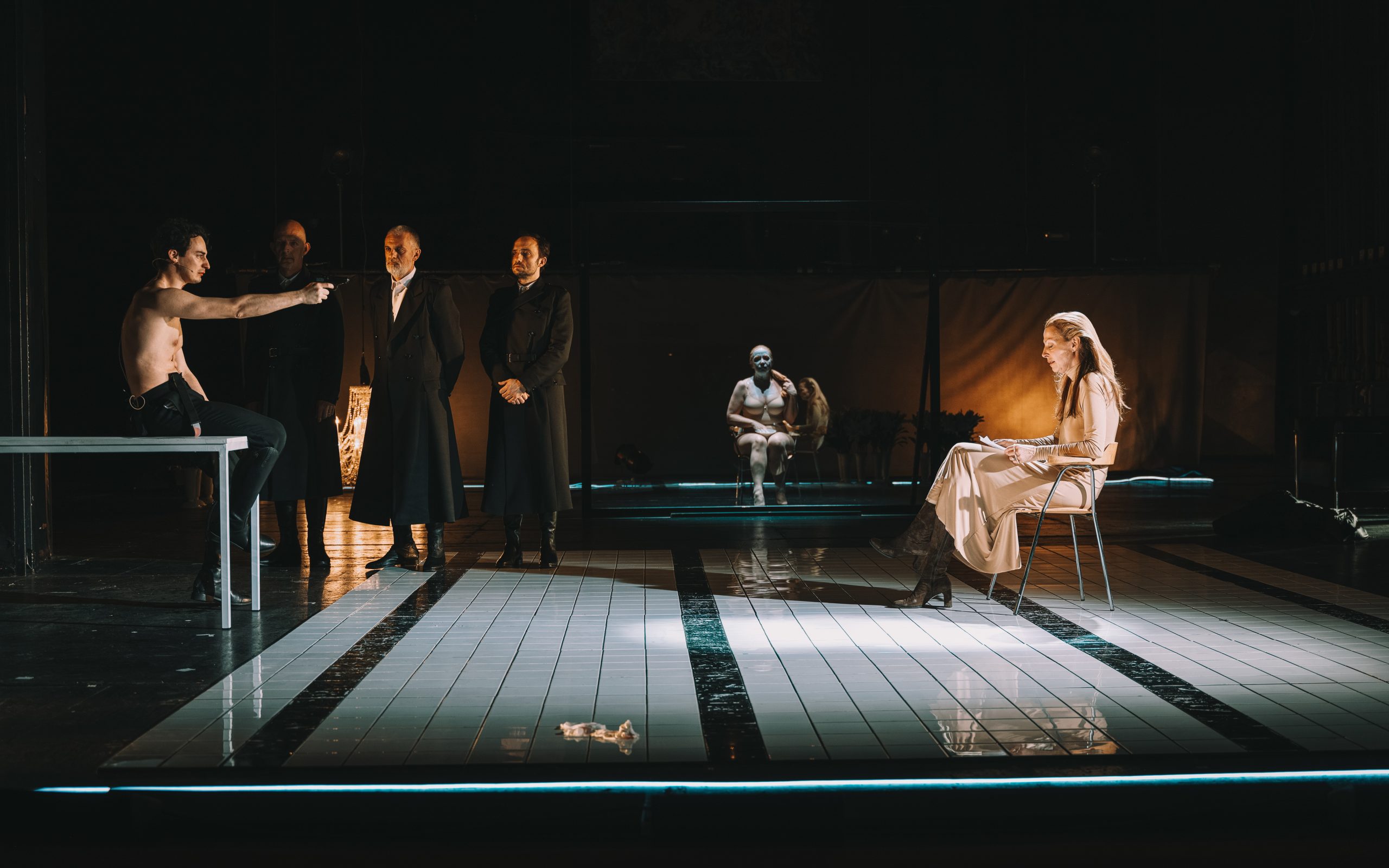
Friedrich Schiller’s Mary Stuart, in the staging and co-authorship of Diego de Brea, is not a historical drama in the classical sense, but a rigorously focused inquiry into the mechanisms of autocratic power – power that perceives truth as a threat. At the heart of the production stands a judicial trial, a dispositif ostensibly designed to guarantee justice, yet exposed here as an instrument of political expediency. As the director suggests, contemporary power no longer requires even the semblance of truthfulness; instead, it actively manufactures reality through falsehood. The production thus reads Schiller’s drama through the prism of the present, a moment in which the articulation of truth has itself become a perilous act.
While remaining faithful to the textual architecture of Schiller’s play, de Brea introduces distinctly contemporary accents, particularly in scenes that foreground Mary’s inner life. His focus rests on the fate of the individual who resists the system, and on the successive stages through which such resistance passes once it becomes clear that, when confronted with a fabricated trial, all argumentative ground has been removed – when law ceases to operate as a form of protection and is transformed into an instrument of coercion.
Schiller wrote Mary Stuart in 1800, in the immediate aftermath of the French Revolution, at a moment when the ideals of freedom, reason, and equality had become dangerously entangled with the concrete realities of political power. As Hana Podjed observes in her reflections on Schiller, the playwright was far from a naïve idealist; he was acutely aware that Enlightenment projects do not eradicate violence, but frequently reconfigure its modalities. Historical material, for Schiller, functions not as reconstruction but as exemplum: events from the sixteenth century are transposed into a universal model of power driven primarily by the imperative of self-preservation. The drama thus unfolds as a confrontation of arguments, legal formulations, and political interests – a conflict in which emotional engagement has no legitimate place. It is precisely this froideur, this almost laboratory-like dissection of power, that grants the tragedy its enduring and transhistorical force.
In this respect, Schiller’s dramatic universe converges with that of Machiavelli: power is not to be evaluated in terms of individual morality, but in relation to the effects it generates. The ruler is compelled to act rationally and without sentiment, even where such action entails the sacrifice of the individual. Mary Stuart unfolds within a political order in which ethics are systematically severed from governance, and in which truth itself becomes an impediment. The judicial process, moreover, no longer functions as a site for the pursuit of justice, but as a ritualised mechanism that merely ratifies decisions already taken. Within such a system, innocence is rendered inconsequential, while guilt emerges as little more than a strategically expedient construct.
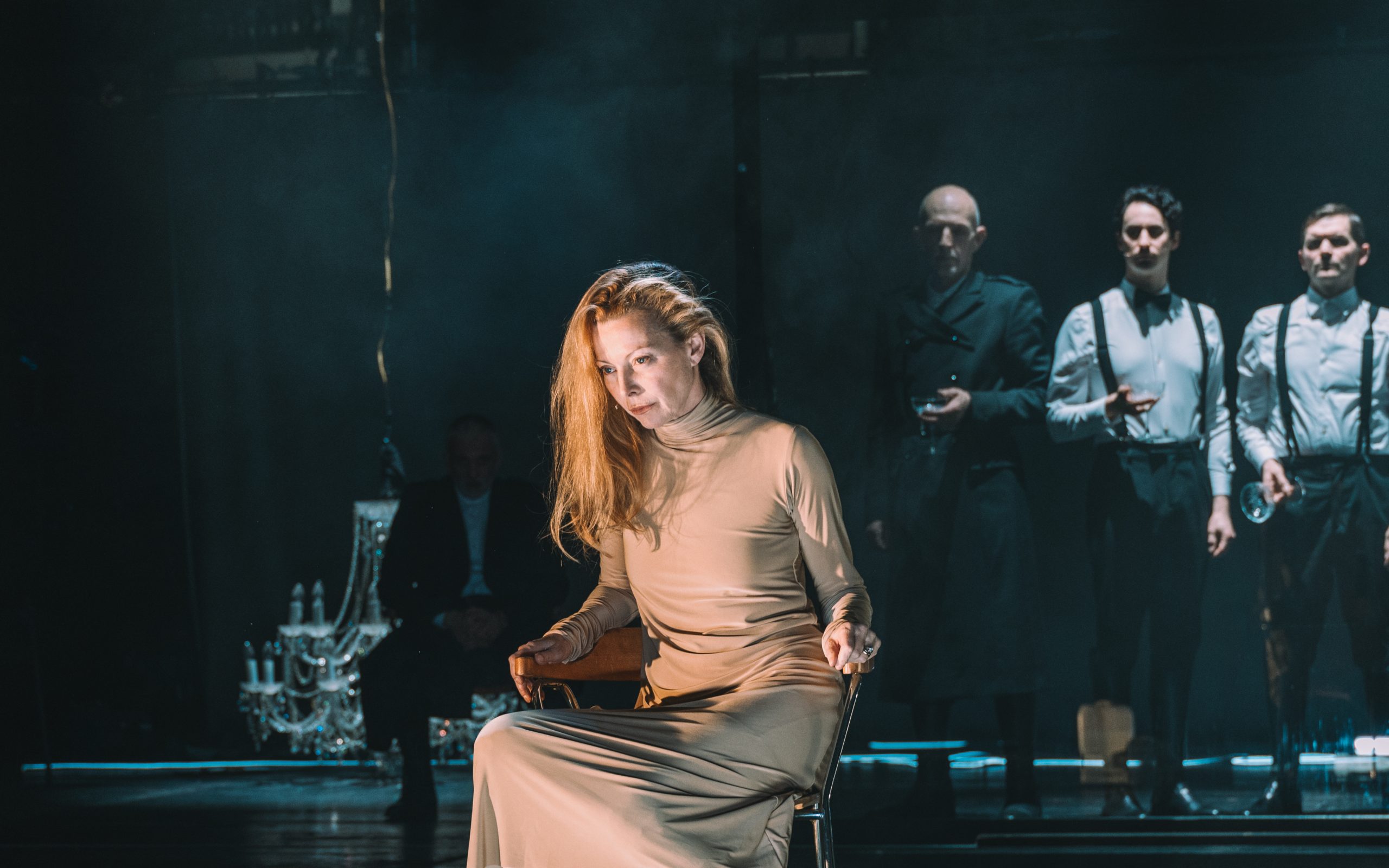
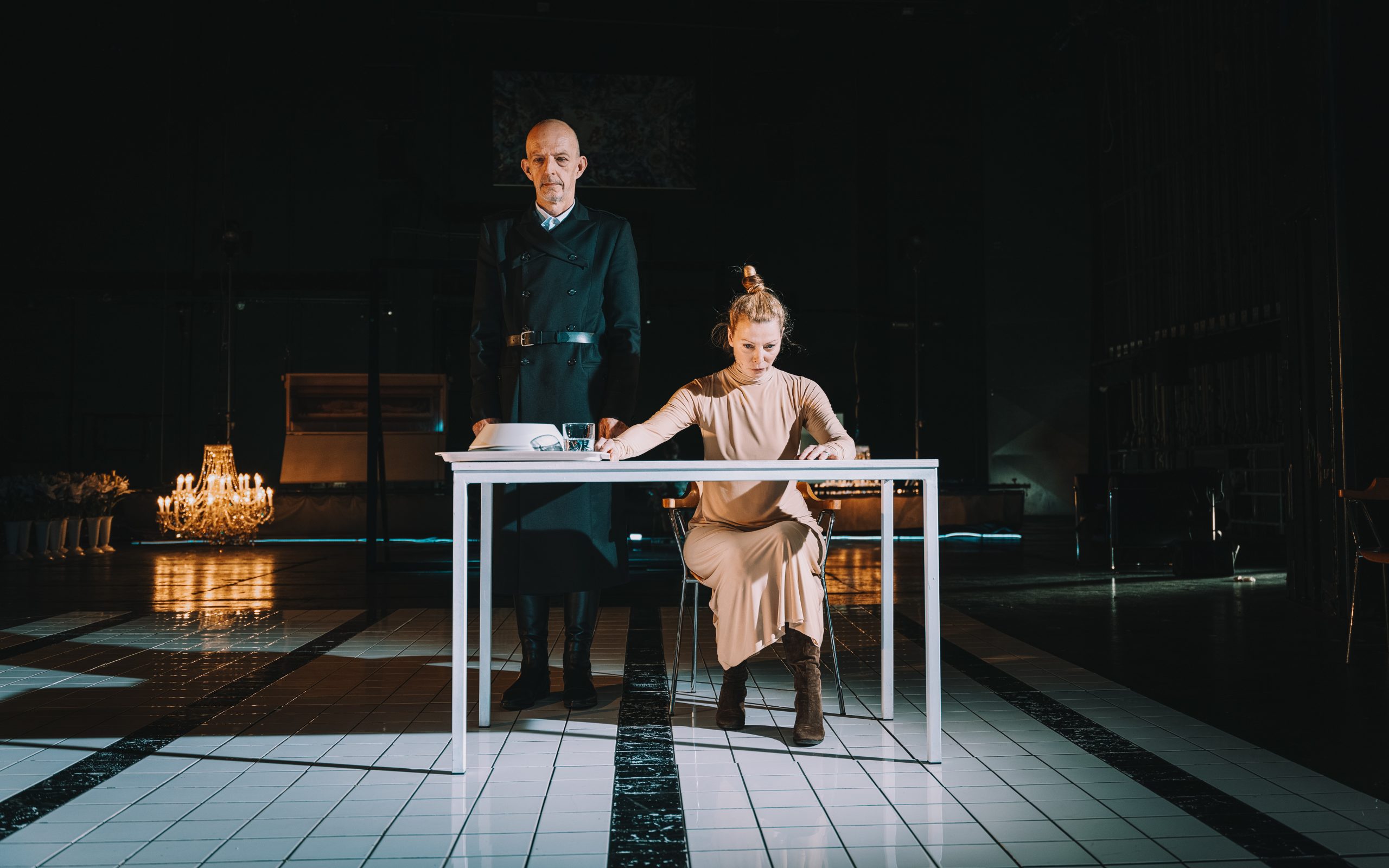
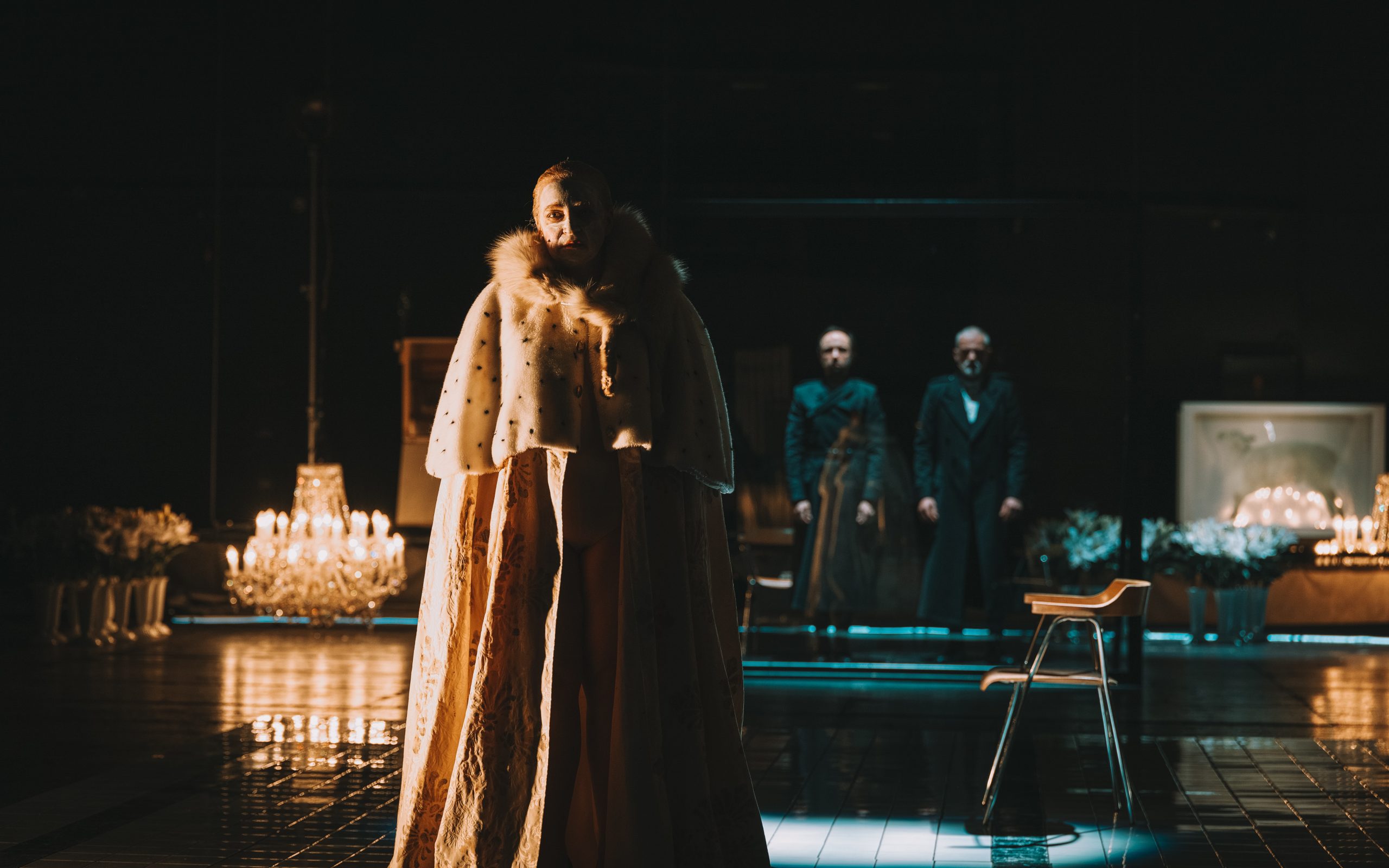
At the centre of the drama stand two queens, Mary Stuart and Elizabeth I, who embody the fundamental rupture of their historical moment. Mary, shaped by the splendour of the French court, inherits authority by blood and experiences it as an intrinsic component of her identity; Elizabeth, by contrast, burdened by the fragility of her legitimacy, is compelled to perpetually secure her power through surveillance, prudence, and political calculation. While one is subjected to physical confinement, the other is bound by the relentless and impersonal logic of sovereignty.
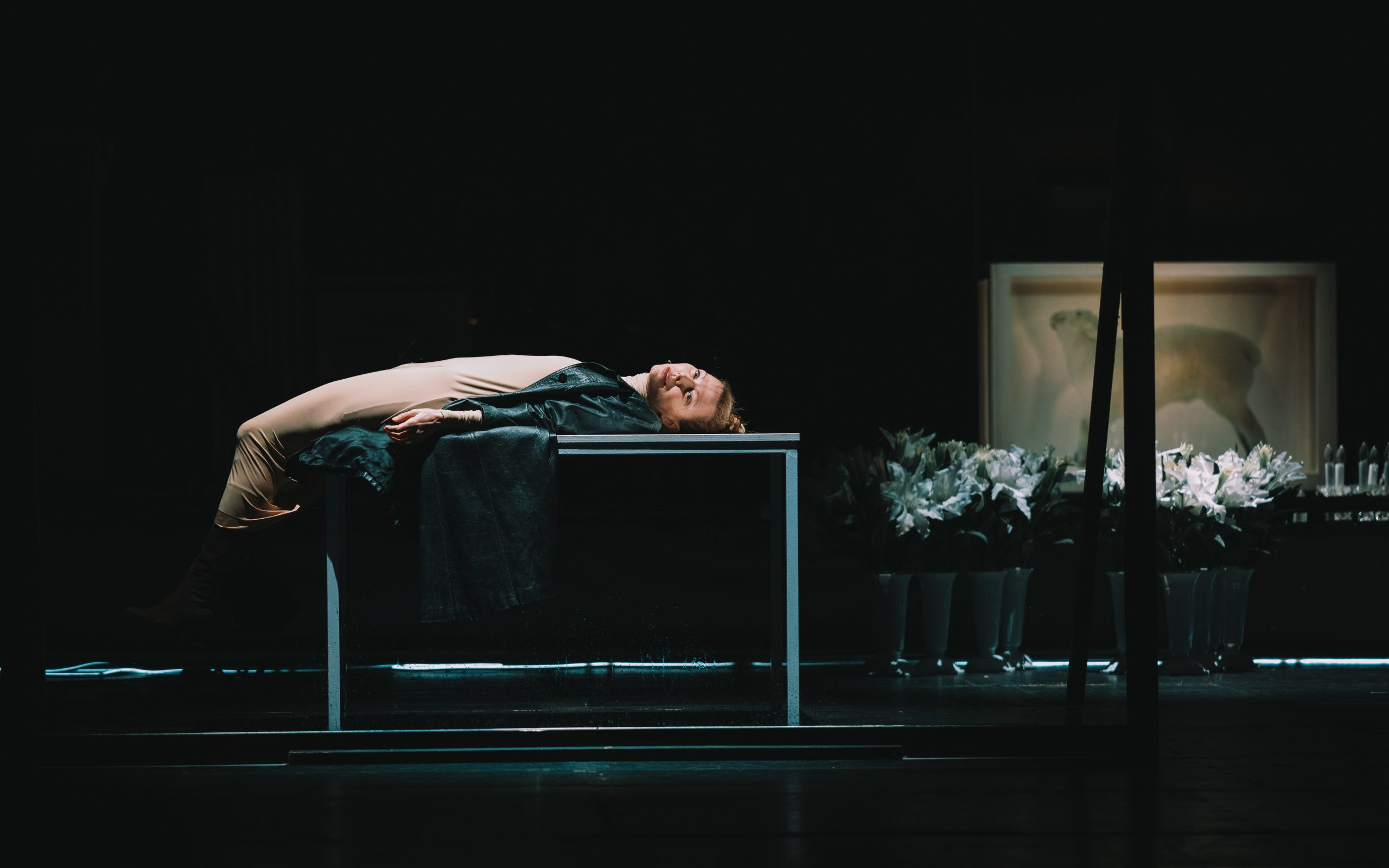
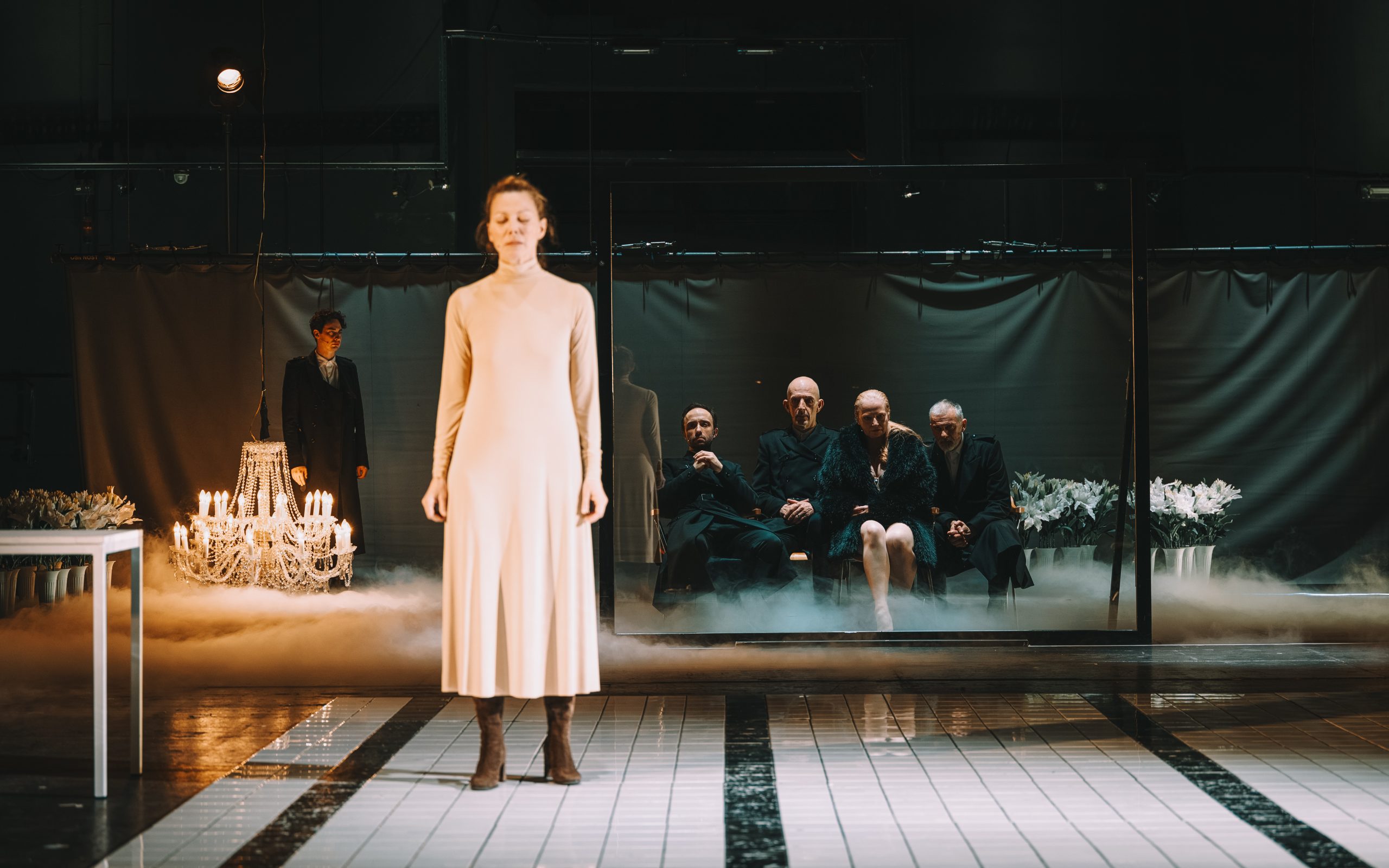
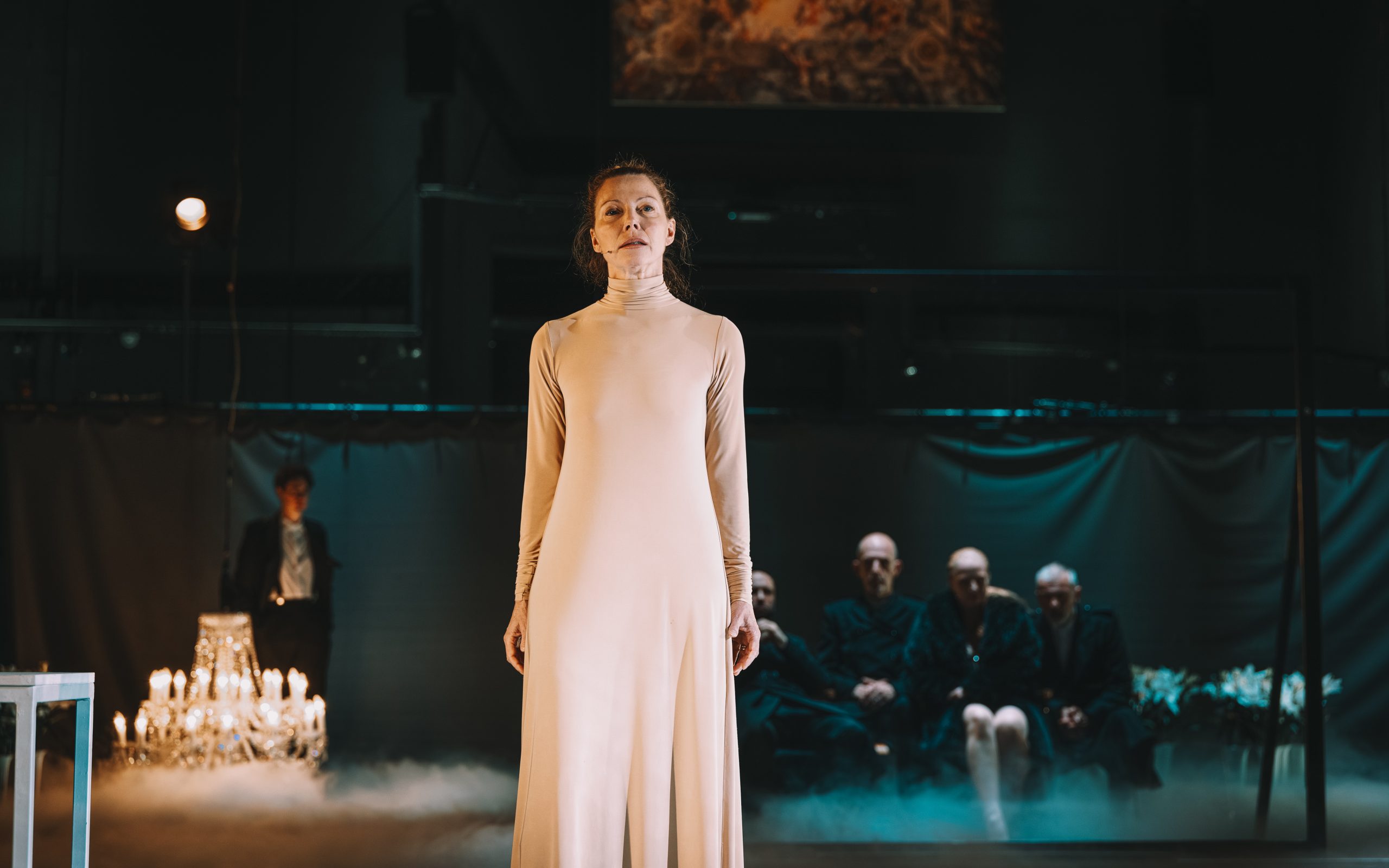
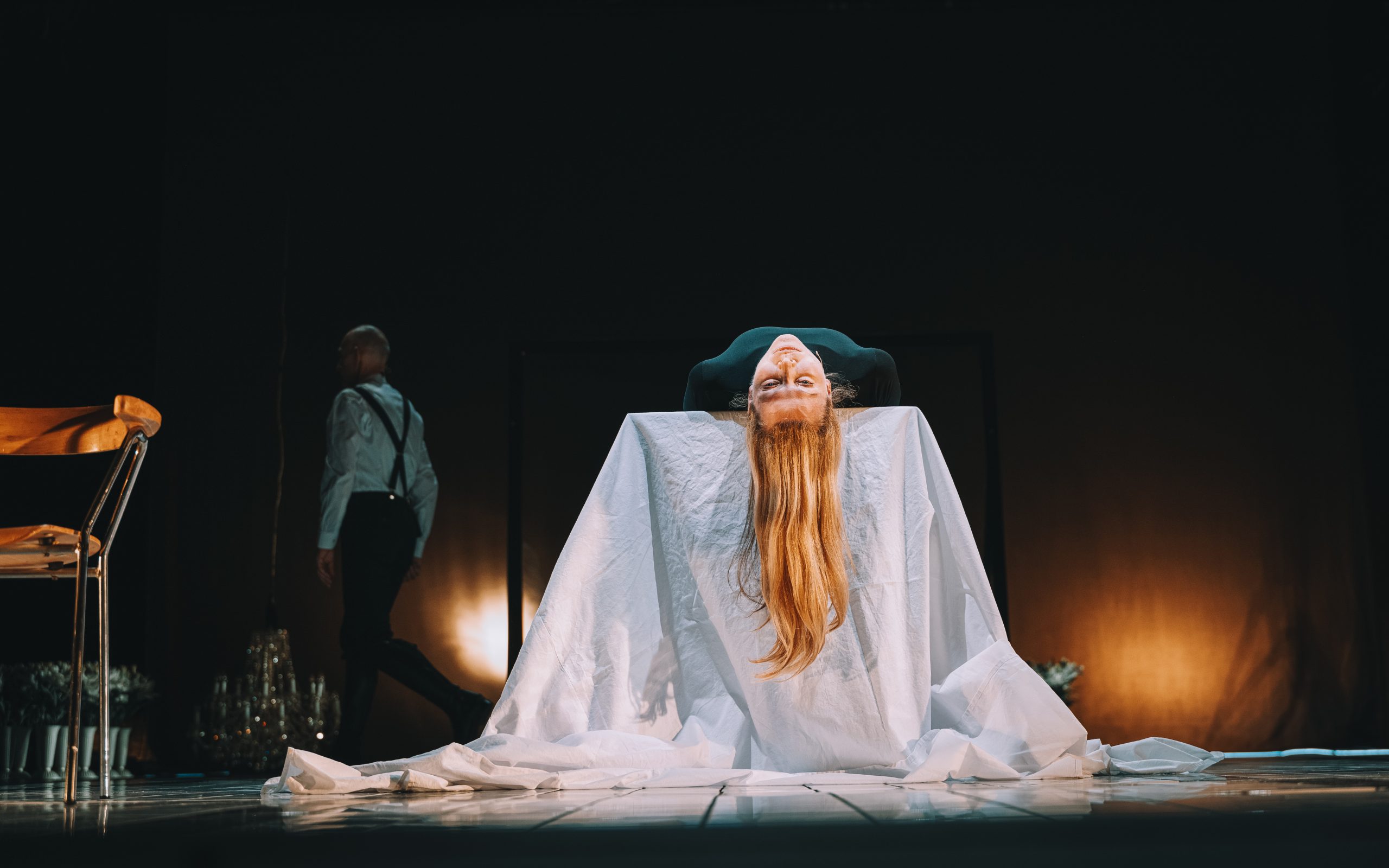
Mary’s courage in this production is articulated not through overt rebellion, but through a sustained ethic of perseverance and endurance. The death sentence that shadows her from the outset does not reduce her to passivity; rather, it becomes the generative principle of the drama’s inner movement. Her trajectory unfolds as a gradual divestment – of body, name, and voice – yet this process of dispossession remains inseparable from a concurrent movement of inner consolidation. Her final victory is neither political nor strategic, but ethical: the achievement of a dignified end. Death thus emerges as the sole force that transcends both the system and the human ego, marking the point at which power relinquishes its hold and the individual, paradoxically, attains freedom.
The dramaturgical analysis by Maja Borin opens onto the broader historical and symbolic horizon of the tragedy. The world of Mary Stuart is that of a Renaissance rupture in which – if we may paraphrase Gramsci’s well-known formulation of interregnum – the medieval order is in the process of disintegration, while the new world has yet to assume a stable form; it is precisely within this unstable in-between that monsters are born. As in Hans Holbein the Younger’s The Ambassadors, scientific, political, and cultural achievements are accompanied by the emergence of vanitas in the foreground: a persistent reminder of transience, the hollowness of power, and human vanity. Death is not relegated to the margins but occupies the very centre of this world, casting its constant shadow over every political act and every sovereign privilege. In this sense, Mary Stuart is not merely a drama about two queens, but a drama of a system that, in order to sustain its own order, repeatedly requires a sacrifice.

Fran Žižek Hall
no intermission
Photo gallery








Cast













Director
Creators
We invite you to see