La Bayadère
La Bayadère
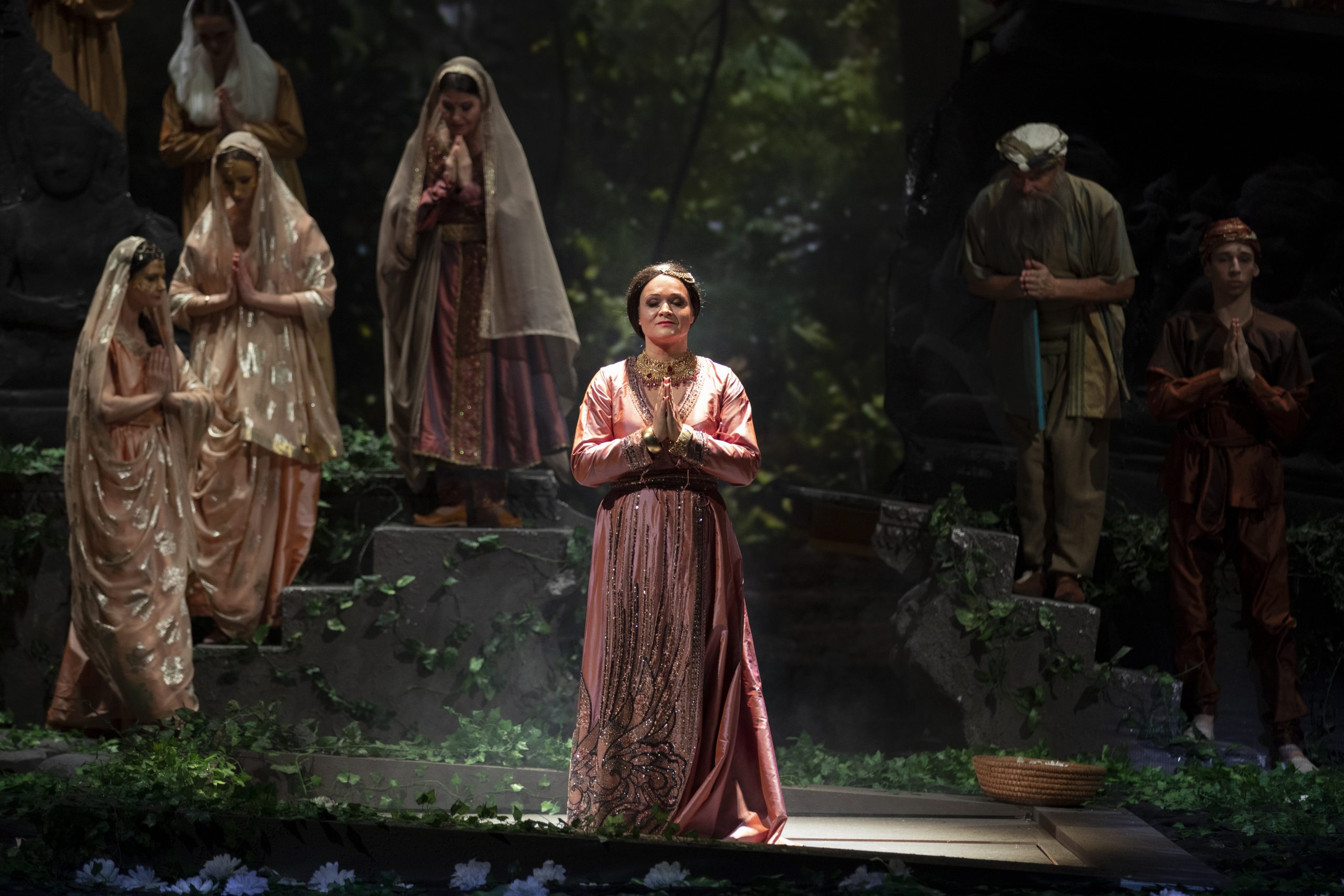
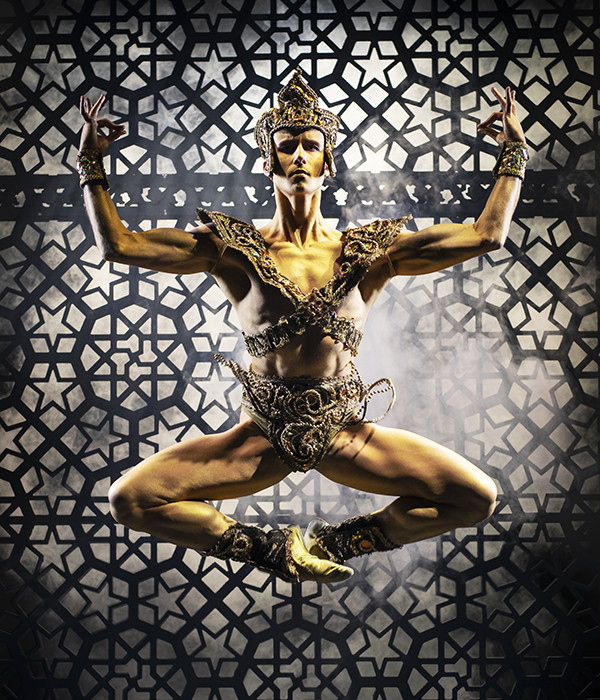
Among the supreme achievements of the classical ballet repertoire, a special place belongs to La Bayadère, Ludwig Minkus’s sumptuous ballet on a libretto by Sergei Khudekov and in the original choreography by Marius Petipa, which since its premiere in 1877 has stood as one of the foundational symbols of the Russian ballet tradition. Set in an “exoticised” India, the story tells of the love between the temple dancer Nikiya and the warrior Solor, a love fatefully shaped by religious and cultural tradition, rivalry, intrigue, and the binding force of an oath. After Nikiya’s death, in the celebrated scene The Kingdom of the Shades, Solor finds himself in a vision of a transcendent realm, where, through an ethereal dance, he is reunited with his beloved.
It is above all in The Kingdom of the Shades that Petipa’s opulent ballet architecture, the aesthetics of classical symmetry, purity of line, and meticulously structured ensemble movement merge with Minkus’s melodic clarity into an almost hypnotic unity of sound and motion. La Bayadère is therefore not merely a ballet about love, jealousy, and death, but also a stage work in which music, movement, and visual composition attain an exceptional degree of unity. In this new and, on this occasion, independent Maribor production, the ballet will be shaped by choreographer Rafael Avnikjan, an outstanding connoisseur of the classical ballet idiom, who cultivates the noble tradition of academic ballet with great sensitivity and, through theatrically compelling and expressive interpretations, brings it successfully closer to contemporary audiences.


Ondina Otta Klasinc Haal


Cast


We invite you to see