STABAT MATER/CARMINA BURANA
STABAT MATER/CARMINA BURANA
A double bill of Carmina Burana and Stabat Mater choreographed by Edward Clug offers audiences a powerful and emotional journey through the timeless themes of hope, love, and destiny. Clug’s reinterpretation of Carl Orff’s Carmina Burana speaks to the human experience, emphasizing our connection to our legacy and our place in the world. The production highlights themes of renewal and regeneration, evocative of the springtime season, and reaffirms the enduring relevance of Orff’s work.
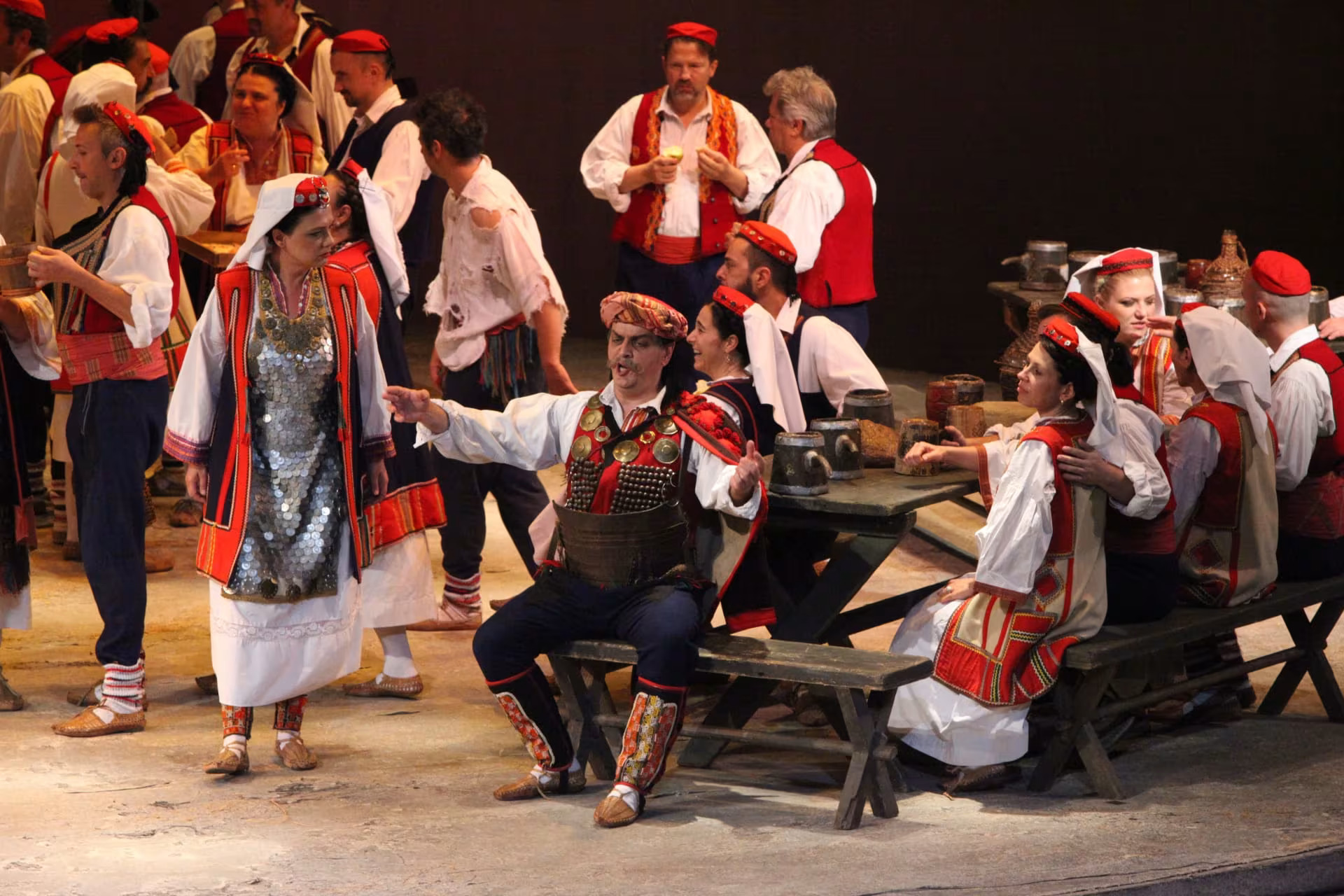
The choreography for Carmina Burana follows the content of various texts from the medieval manuscript Codex Buranus, drawing a parallel between the cycles of nature and human life and lust. The movement tension of the journey through twenty-four “songs” is the awakening of lust in the young body, which longs for the forbidden and unattainable (fruit). The shape that spontaneously emerged was a circle that coincided with the circle of fortune from the first song of O Fortuna, and the dance is created by thirty dancers, each aspiring to the core of this perfect natural form. Symbolically kneaded, the cantata is undoubtedly still an extremely popular work today, and Clug’s interpretation emphasizes spontaneous movement impulses that would address the viewer during the unfolding of the musical flow and unobtrusively include him in this constantly rotating circle of life.
Stabat Mater is a choreographic exploration of Pergolesi’s masterpiece, representing one of the many musical ‘depictions’ of Holy Mary’s suffering by the cross during the crucifixion of her son Jesus. The composition itself reflects the author’s personal experience and attitude towards this particular biblical episode. Clug’s interpretation highlights the hope that is imbued in Pergolesi’s music, in contrast to the pain and anguish of the Mother. The choreography has a strong allegorical reference with regards to traditional biblical imagery, but the ironic context of everyday life transforms these depictions into a new kind of intimacy and timelessness of the dance, which reflects our personal understanding of the mother-son relationship.
Overall, the double bill of Carmina Burana and Stabat Mater is a profound and emotional experience, highlighting the universal themes of hope, love, and the resilience of the human spirit. Clug’s choreography brings new life and relevance to these iconic works, inspiring audiences to reflect on their own place in the world and the legacy they will leave behind.
























Cast
























Creators
We invite you to see